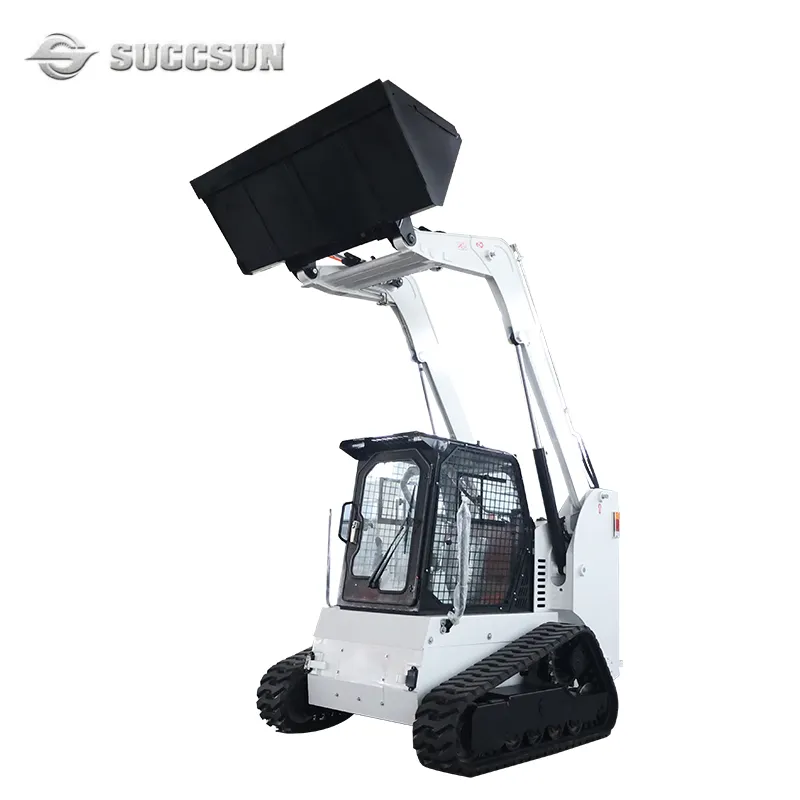
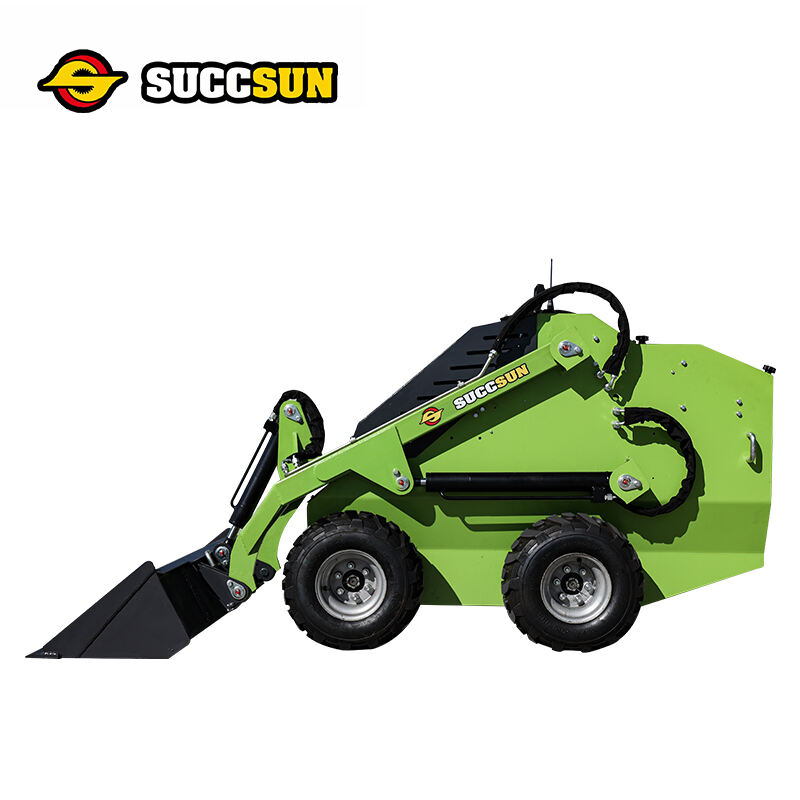
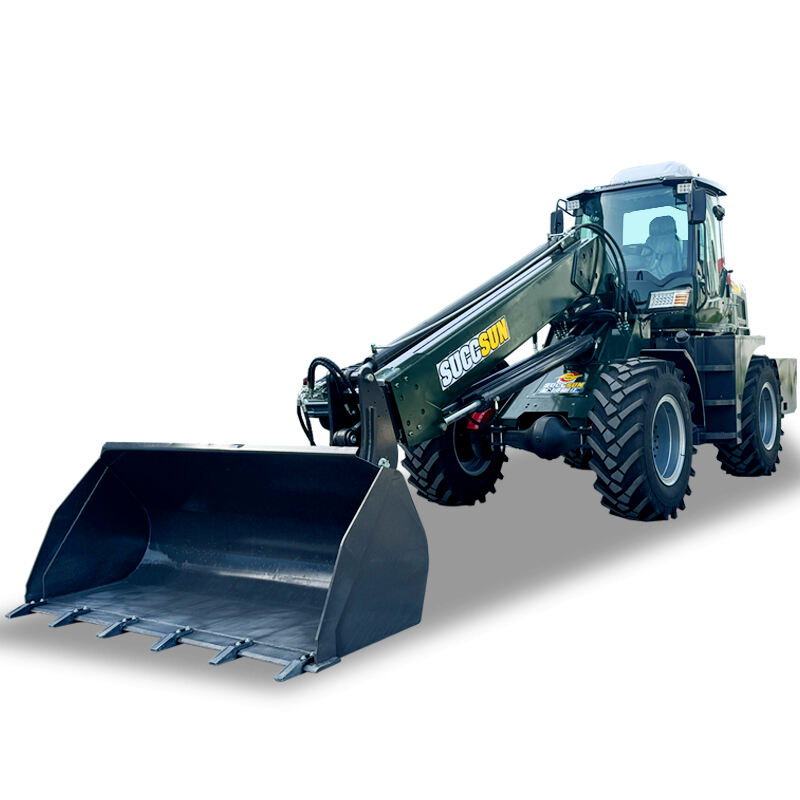
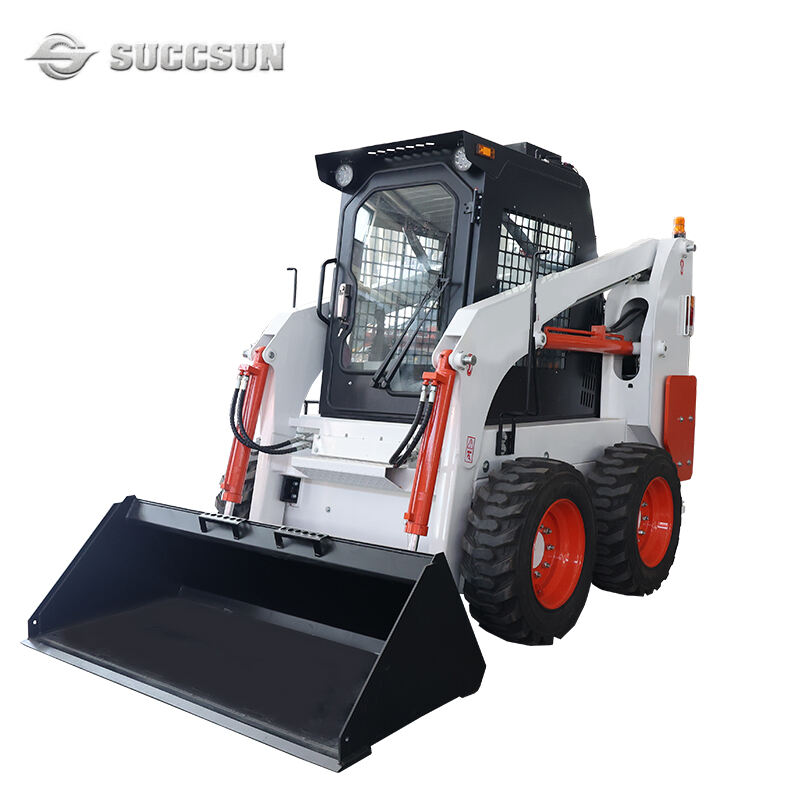
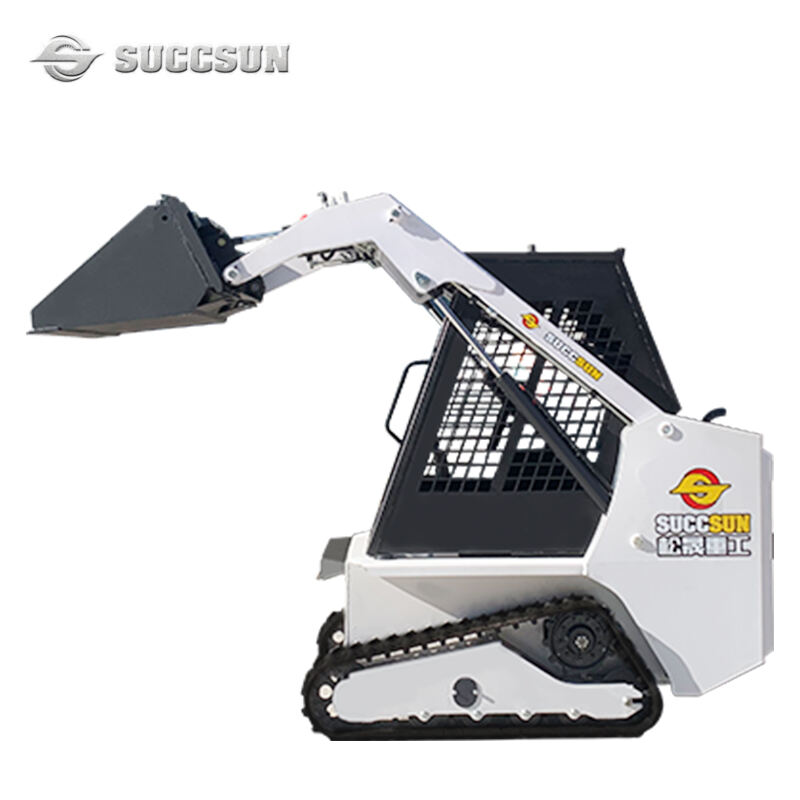
In modern construction scenarios, hydraulic breakers have long surpassed their role as ordinary attachments, becoming revolutionary tools for enhancing engineering efficiency. These specialized devices, designed for skid-steer loaders, convert hydraulic energy into high-density impact energy (peaking at over 3,500 ft-lb), enabling compact equipment to achieve precise breaking in narrow worksites—such as interior demolition in buildings or urban roadway operations—that large excavators cannot perform. This not only eliminates the need for six-figure investments in specialized equipment but also completely eliminates the era of high-risk manual labor.
From a multifunctional perspective, a single breaker can replace four or more types of equipment: whether it's concrete foundation demolition, rock drilling and blasting preparation, permafrost excavation, or asphalt pavement repair, it can efficiently advance at a rate of 20-40 cubic yards per hour. Especially in the mining sector, its rapid disintegration capability for massive rock blocks can avoid secondary blasting costs exceeding $30,000 per instance; In landscape engineering, its efficiency in breaking tree roots and bedrock is more than three times that of traditional electric hammers.
The cost control advantage is even more evident: taking the North American market as an example, renting specialized crushing equipment costs over $150 per hour, while converting an existing skid loader into a crushing platform can recoup the attachment cost in just 3-5 projects. More importantly, it reduces manpower requirements—a single operator can achieve the workload of a four-person hammering team, especially when handling high-strength tasks such as 8-inch concrete slabs, with a 40% increase in overall efficiency.
Technological advancements have endowed contemporary products with dual breakthrough features: on the engineering side, chisel blades forged from S7 special steel combined with a sealed valve core design achieve wear resistance under millions of impacts; In terms of ergonomics, vibration transmission below 7 m/s² (compliant with ISO 28927-10) significantly reduces operator fatigue, and when combined with a remote control system, it completely eliminates personnel exposure risks in high-risk scenarios such as falling objects or collapses, as defined by OSHA.
When focusing on industry-level impact, its transformative nature becomes even more evident: in road maintenance, replacing small excavators can save $8,000 per operation; demolition companies can reduce building demolition cycles by 40% using this equipment; and for energy pipeline projects in permafrost regions, it has become an indispensable ice-breaking solution for winter construction. This sharp reduction in marginal costs achieved through equipment multifunctionality is redefining the construction economic model.
 EN
EN