 EN
EN


Power Density: How Mini Skid Steer Loaders Deliver High Performance in Compact Form
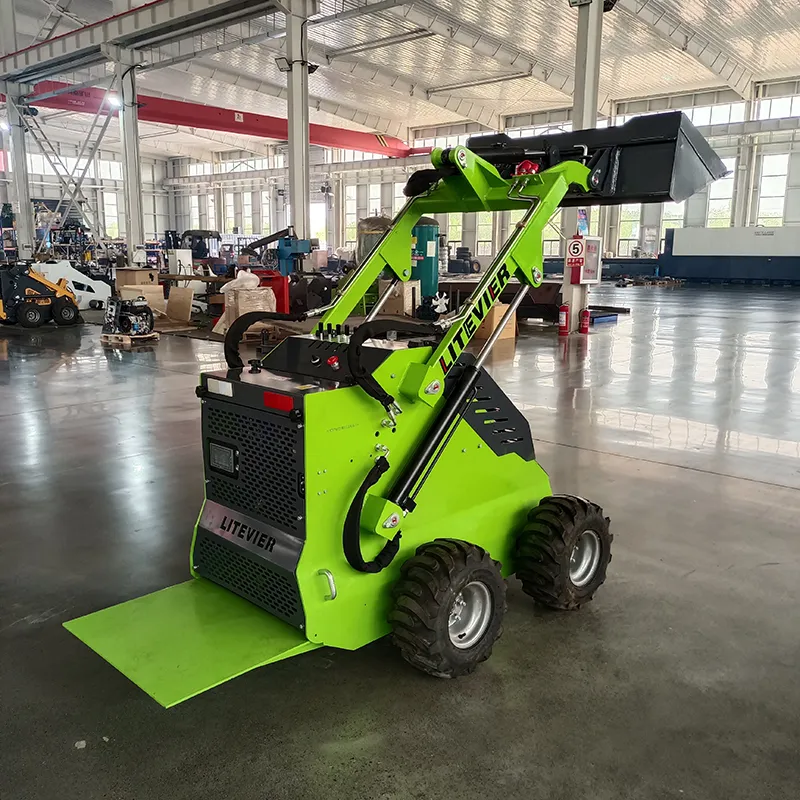
Engineering the power-to-weight ratio: compact engines, optimized hydraulics, and reinforced chassis design
What makes mini skid steer loaders so powerful for their size? Well, there are basically three things that set them apart. First off, they come equipped with compact turbocharged diesel engines that pack quite a punch despite their small footprint. These engines typically generate somewhere between 40 to 60 horsepower, which is pretty impressive when considering how light they are and the fact that they also manage to keep emissions down. Then we have the hydraulic system, which is actually pretty smart engineering. The design allows around 98 percent of the engine's power to reach whatever attachment is being used, thanks to pumps that have been carefully optimized and flow paths that aren't unnecessarily restricted. And let's not forget about the frame itself. Built with a reinforced box section, this chassis can handle stress loads that are 1.5 times what normal operations would require, all without bending or warping over time. When put together, these features create something remarkable: a power to weight ratio better than 0.8 horsepower per pound. That means industrial strength performance even in tight work areas measuring just 50 square feet or less.
Lift capacity and torque benchmarks: 1,200–1,800 lbs at 20" vs. footprint under 48 inches wide
The machines can actually lift between 1,200 to 1,800 pounds when measured at a 20 inch load center point, all while sitting within a space less than 48 inches wide. That's pretty narrow compared to most standard interior doors in buildings. The hydraulic system produces steady torque throughout its operating range, typically between 2,500 and 3,200 pound feet of force. What this means for operations is that workers can move materials through tight spaces like elevators and narrow hallways without needing bigger machinery that just won't fit. Sometimes people think big machines are needed for heavy lifting, but these compact units show otherwise. They prove that good performance doesn't always come with a huge footprint requirement.
Dimensional Intelligence: Designing for Access in Confined Job Sites
Critical width tiers (36", 42", 48") and real-world gate, doorway, and elevator clearance requirements
Mini skid steer loaders are engineered around three standardized widths—36", 42", and 48"—each aligned with common architectural and logistical constraints:
- 36" models clear residential gates and standard interior doorways (typically 32"–36")
- 42" units fit commercial service elevators, which commonly require a minimum 42" clearance
- 48" configurations balance stability with access to narrow alleyways and landscaped zones
According to industry numbers, around 78 percent of jobs in cities have those tight spots where clearance is less than 50 inches wide. That's why equipment makers are getting creative these days. They're hiding away parts that stick out too much - think recessed hydraulic connections, exhaust pipes angled toward the center of the machine, and lights mounted right into surfaces rather than sticking out. These design tweaks mean machines can still handle heavy loads, even ones over 1,500 pounds, without needing expensive changes to existing workspaces or slowing down movement around the site. Pretty smart engineering when space is at a premium.
Maneuverability Mastery: Zero-Turn Radius and On-Site Navigation Precision
Hydraulic and mechanical enablers of true zero-turn operation in mini skid steer loaders
What makes true zero turn possible? It all comes down to those independent wheel motors powered by hydraulics instead of traditional mechanical steering systems. When making direction changes, the synchronized hydraulic system keeps pressure steady throughout, and the planetary gears are built tough enough to take on pressures well beyond 3,500 pounds per square inch. Special valves control the fluid flow so machines can change direction really fast, sometimes in half a second or less. This lets operators make those tiny adjustments right next to walls or delicate objects without causing damage. The whole drivetrain is designed compactly too, directing power precisely where it's most needed. Think about maneuvering inside the machine's own space in narrow alleys or turning around completely indoors without bumping into anything. That kind of control makes all the difference in tight working conditions.
Field validation: Navigating an 8 ft ¢€“ 10 ft indoor renovation corridor in Shanghai
During a recent renovation project in one of those tall buildings in Shanghai, regular mini skid steer loaders managed to move around 1200 pound tile pallets through narrow corridors measuring roughly eight feet by ten feet. There was barely three inches of space between the walls on either side, which made maneuvering quite challenging. The operators had to make about twenty two directional changes every single minute while getting the job done 40 percent quicker than what could be achieved manually, all without touching any walls along the way. Some infrared positioning systems were used to track where exactly the machines were going, showing that they stayed accurate to within less than an inch even when running nonstop for extended periods. What we saw here proves beyond doubt that these zero turn features aren't just ideas floating around somewhere theoretical land; they actually work wonders when it comes down to boosting both efficiency and accuracy in tight spots where traditional equipment simply cannot fit.
Task Flexibility Through Rapid Attachment Integration
Sub-90-second attachment swaps and seamless compatibility with hydraulic tools (e.g., buckets, brooms, augers)
The mini skid steer loader really shines when working in cramped areas thanks to those handy hydraulic quick couplers and universal mounts that let workers switch attachments in less than 90 seconds flat. No more fumbling around with pins taking forever to remove, which is exactly what busy urban construction sites need these days. These machines work great with over 200 different hydraulic attachments on the market today. Think buckets for digging, brooms for cleaning up debris, and augers for making holes. They handle flows between 15 and 25 gallons per minute and pressures ranging from 2,500 to 3,500 pounds per square inch pretty well too. Operators can easily swap from using a big 72 inch broom for leveling surfaces to switching over to a small 12 inch auger for digging trenches right away without having to mess with any extra settings. Some recent field tests in 2023 showed these versatile machines cut down job times by about 40% compared to older models. And best of all, one machine can take care of roughly 85% of what most job sites need without bringing in additional equipment just for specific tasks.
FAQ Section
-
What is the typical horsepower of mini skid steer loaders?
Mini skid steer loaders typically have engines that generate between 40 to 60 horsepower.
-
How wide are mini skid steer loaders?
Mini skid steer loaders are engineered around three standardized widths: 36", 42", and 48".
-
How quickly can attachments be swapped on a mini skid steer loader?
Attachments can be swapped in less than 90 seconds thanks to hydraulic quick couplers and universal mounts.
-
What is the lift capacity of these machines?
Mini skid steer loaders can lift between 1,200 to 1,800 pounds at a 20-inch load center point.