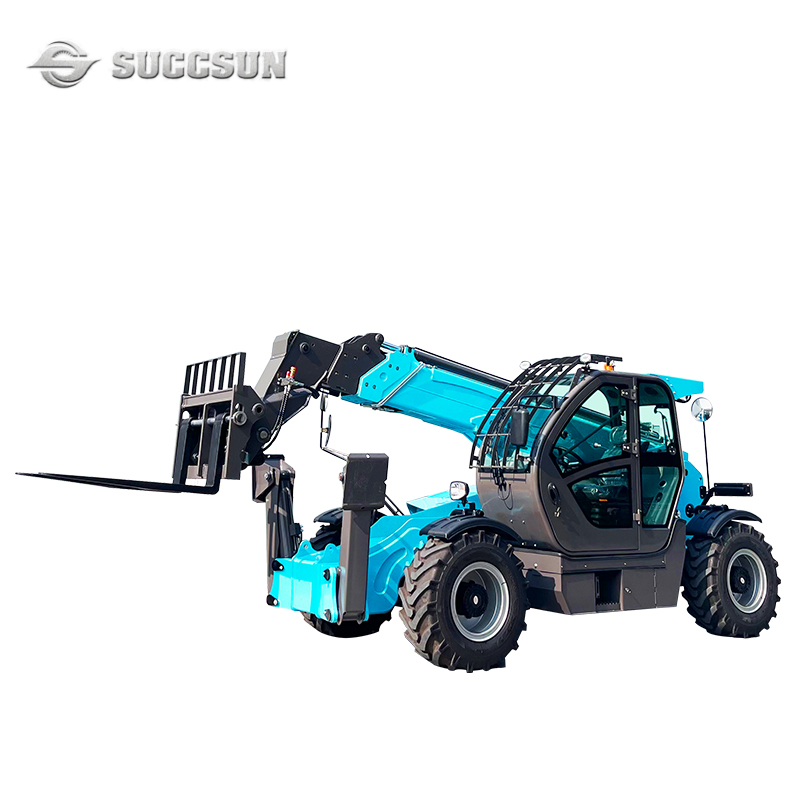
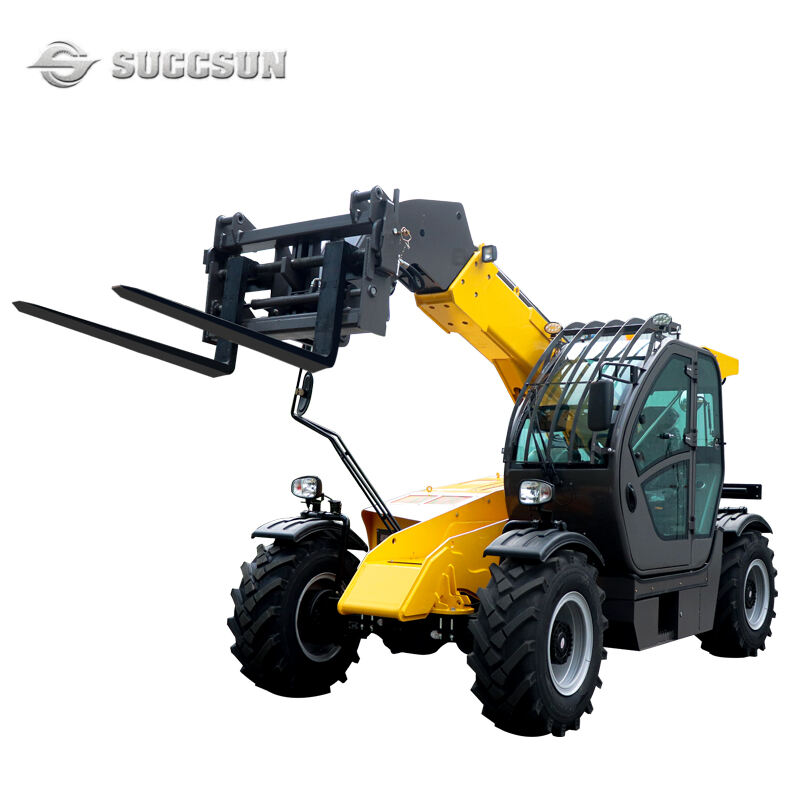
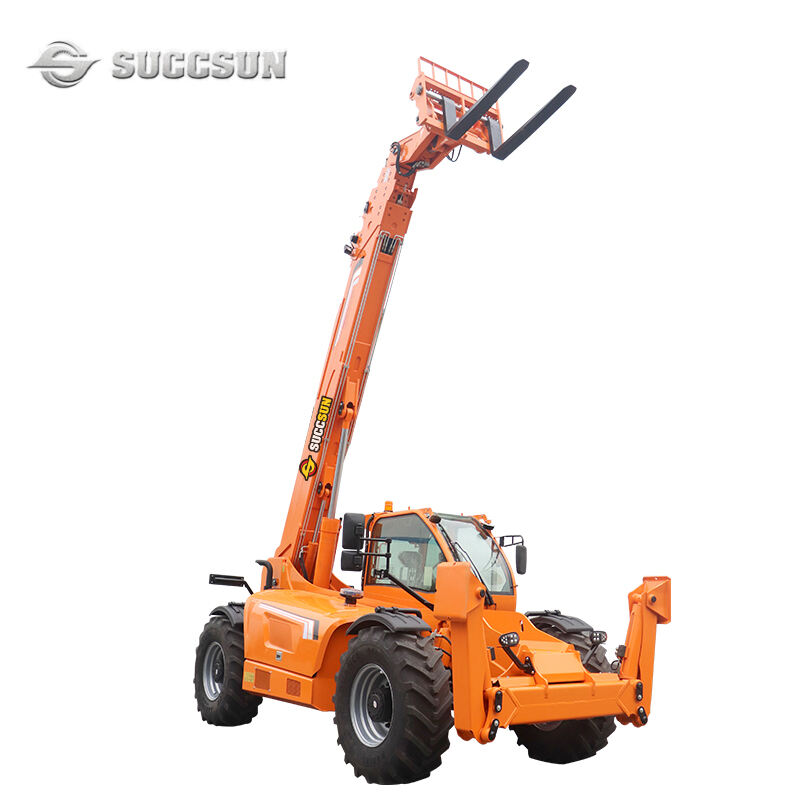
The significance of the crane telehandler extends far beyond that of a conventional engineering machine. It represents a breakthrough solution in the field of industrial material handling, designed to address the long-standing challenges of efficiency bottlenecks, safety risks, and project delays that have plagued the industry. This innovative equipment combines the exceptional reach capabilities of traditional telehandlers with the powerful precision lifting functions of a crane, creatively overcoming the limitations of single-purpose equipment in terms of functionality. This results in significant improvements for businesses in terms of time, cost, and safety.
Its core value lies in eliminating compromises and achieving synergistic efficiency. Traditional construction sites often have to deploy multiple pieces of equipment simultaneously: telescopic boom forklifts handle extended operations and material movement, while heavy-duty cranes perform concentrated lifting tasks. The crane telescopic forklift integrates these two core functions into a single powerful platform, producing not just a simple sum of its parts but a significant synergistic effect. It can easily achieve lifting heights exceeding 60 feet and lifting capacities over 15 tons on uneven terrain, delivering unprecedented operational flexibility and coverage.
Unparalleled control capability is its key advantage. Unlike standard telescopic boom forklifts, which can only accommodate forks or buckets, the crane telescopic boom forklift is equipped with a hydraulic hook, winch, and rotation control system, providing material placement accuracy approaching millimeter precision. This precise control is critical for applications with extremely stringent requirements, such as steel structure installation (e.g., I-beams, trusses), high-precision positioning of precast concrete components, and positioning of industrial large modules. In these fields, “good enough” is simply unacceptable.
In terms of overcoming complex terrain and simplifying logistics coordination, it demonstrates unparalleled adaptability. Mobile cranes typically require a solid, level foundation and lengthy installation preparation. However, the crane boom forklift can operate stably in chaotic working conditions: whether it's muddy construction pits, uneven mine sites, or space-constrained warehouse environments, its four-wheel drive system and swing axle design enable it to perform heavy lifting in areas where wheeled cranes cannot operate, without the need for dedicated crane platforms or road closures, significantly simplifying logistics coordination processes.
Ultimately, its revolutionary economic value lies in significantly reducing overall costs and minimizing downtime. By replacing the previously required telescopic boom forklift trucks and mobile cranes with a single machine, companies can directly save on equipment investment costs. Additionally, reducing operational waiting times and the need for multi-device coordination significantly lowers labor and fuel consumption. Fewer devices operating on-site also help minimize damage to construction surfaces. For example, in tasks such as installing rooftop HVAC units, using a crane telescopic boom forklift can make a single operator's efficiency three times faster than traditional three-crane lifting solutions, clearly demonstrating a substantial return on investment.
 EN
EN