The Strategic Value and Industry-Transforming Significance of Electric Micro Wheel Loaders
In the critical period of continuously tightening global environmental protection policies, electric mini wheel loaders have become the core solution for meeting the stringent emission regulations of environmentally advanced cities such as Berlin, California, and Tokyo. Their zero tailpipe emissions not only eliminate harmful gas pollution at the worksite but also allow the equipment to legally enter sensitive areas such as indoor warehouses, hospital surroundings, and school campuses that are off-limits to traditional diesel machinery, directly avoiding hefty environmental fines. From an economic perspective, electric models can reduce fuel costs by over 70% and maintenance costs by 50%—completely eliminating high-frequency maintenance tasks such as oil changes and particulate filter cleanings required for diesel equipment. This creates strong cost appeal for budget-sensitive users such as landscaping contractors, municipal engineering departments, and horse farm operators.
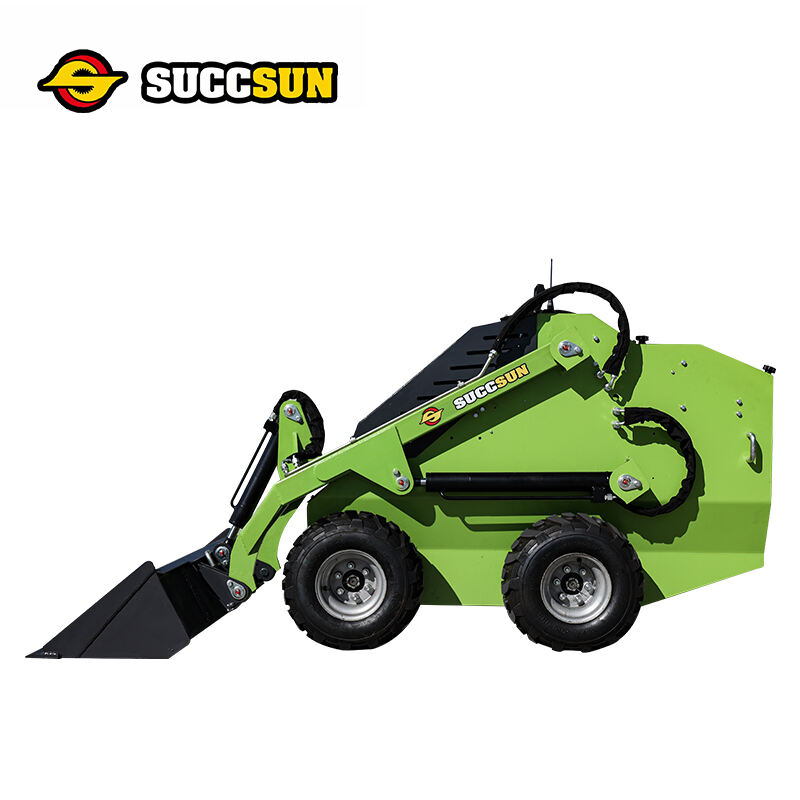
The groundbreaking combination of quiet technology (<80 decibels, lower than a household vacuum cleaner) and a compact chassis (width <1.5 meters) creates operational scenarios unattainable by traditional equipment: avoiding noise complaints in urban nighttime construction zones, performing material handling in food factory cleanrooms with limited ventilation, and even mitigating vibration damage risks in historical building restoration projects. This spatial adaptability directly translates into productivity advantages—operational efficiency in confined spaces such as narrow livestock shed corridors, urban alleyway renovation sites, and interior spaces of mobile construction shelters can be improved by over 40%.
Its strategic value is further demonstrated in redefining market competitiveness. Contractors can use this equipment to bid on projects traditionally off-limits: mall renovation projects requiring simultaneous construction during operations, LEED-certified green building projects with zero-emission requirements, and high-end scenarios such as heritage site restoration. The convenience of charging infrastructure further enhances practicality: standard 220V outlets can be used for overnight charging, and fast charging for 1-2 hours restores 80% of battery capacity, completely eliminating operational pain points associated with diesel equipment, such as fuel storage permits, leakage risk management, and supply interruptions. This is particularly suitable for landscaping companies and equipment rental businesses with multiple concurrent projects. Finally, a streamlined transmission structure combined with an energy recovery system extends maintenance cycles by 200%, while a pre-installed remote diagnostic system proactively alerts for potential issues, significantly reducing downtime losses in the rental industry.
 EN
EN