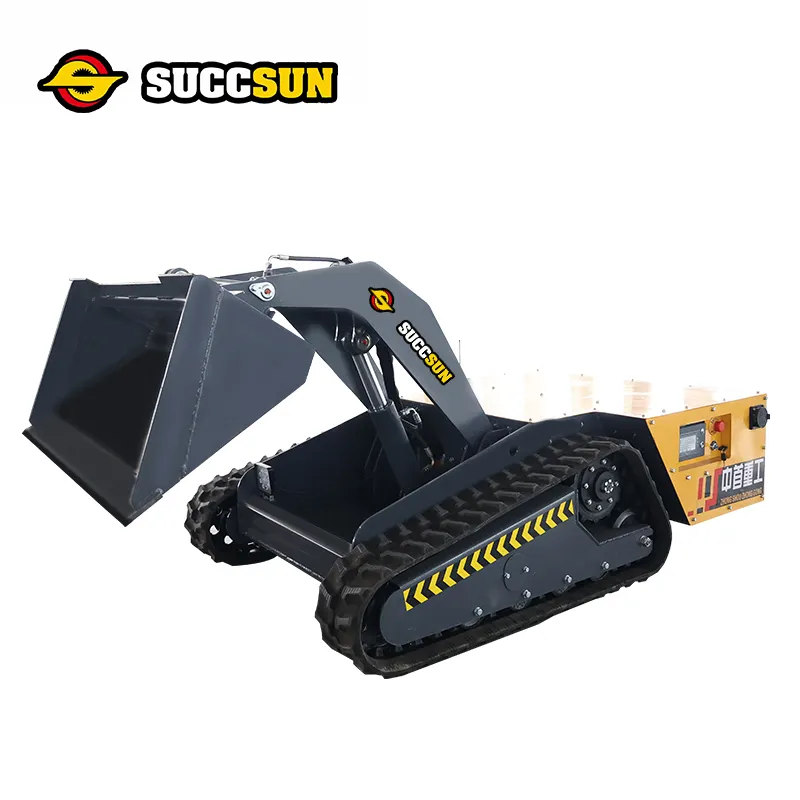
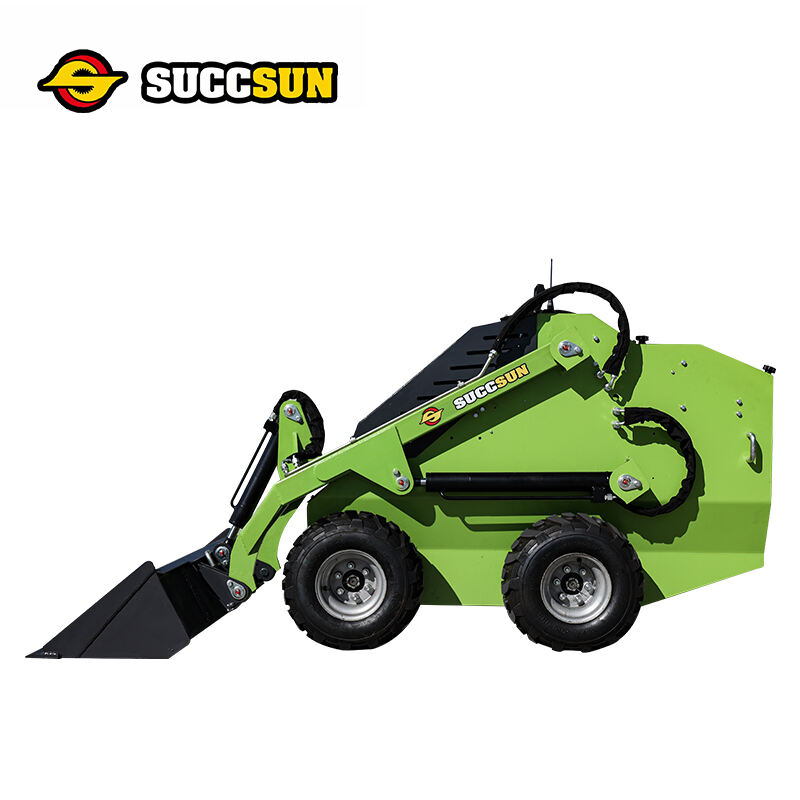
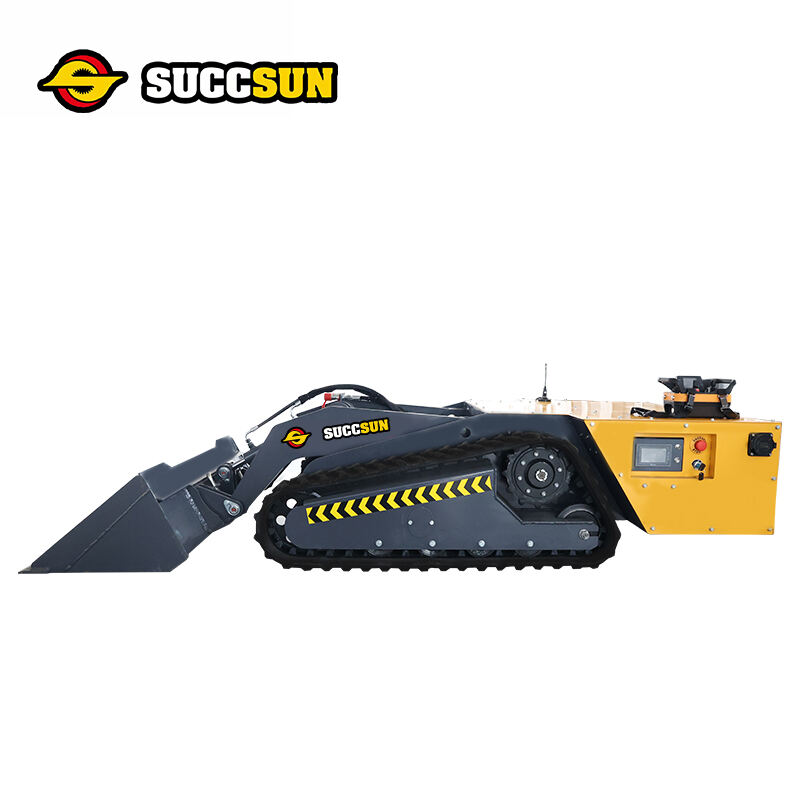
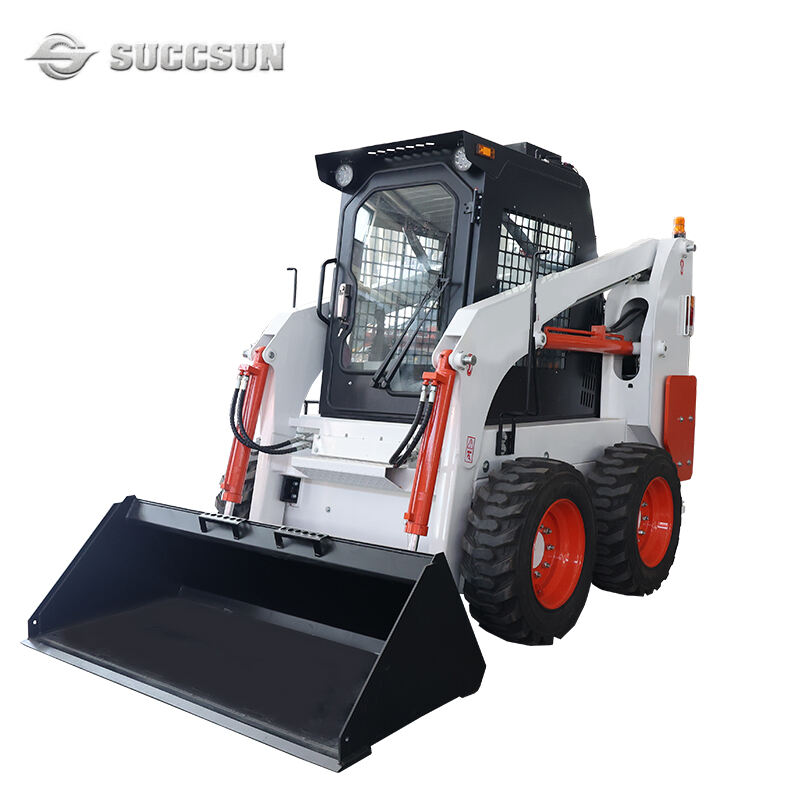
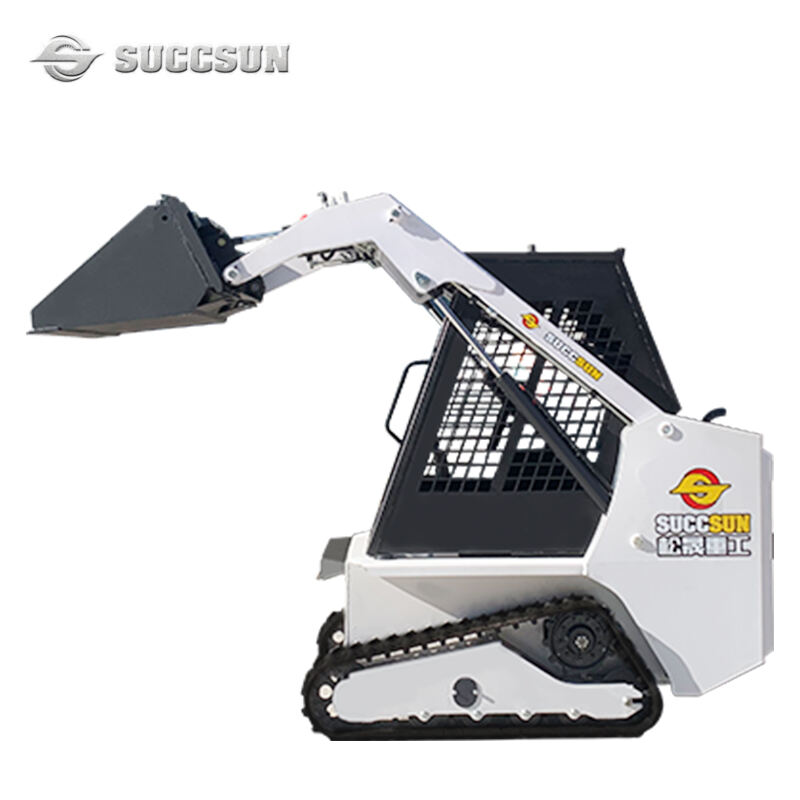
The revolutionary significance of the remote-controlled mini loader lies in its ability to completely transform the way work is carried out in confined spaces and hazardous environments, offering solutions that traditional equipment or manual labor simply cannot match. Its primary value lies in unparalleled operator safety: through wireless remote control technology, operators can stay clear of high-risk areas such as trenches at risk of collapse, enclosed environments with toxic gases or oxygen deficiency, structurally unstable zones, and extreme temperature conditions. This not only significantly reduces workplace accident rates and insurance costs, ensuring compliance with stringent safety regulations (such as OSHA), but also unlocks critical operational scenarios that were previously difficult to access due to safety concerns.
Secondly, its exceptional capability to handle extremely confined spaces is its core value. With a compact body design (typically less than 36 inches wide) and excellent maneuverability, the remote-controlled mini loader can easily navigate narrow alleys, crowded basements, densely landscaped areas, utility tunnels, and even the interiors of buildings—spaces that large machinery and construction crews simply cannot access. This directly eliminates time-consuming and labor-intensive manual operations, significantly shortening project timelines (e.g., basement excavation, pipeline repairs, greenhouse operations) and minimizing disruption to the surrounding environment caused by accessing and exiting the work area.
Third, the precise control enabled by remote operation is another significant advantage. Operators can select the optimal viewing angle to perform tasks requiring high precision, such as fine grading around foundations, precise landscaping work, precise material positioning in confined spaces, or handling fragile items. This level of control enhances work quality, reduces rework, minimizes material waste, and enables the completion of intricate tasks that large equipment or traditional control methods cannot achieve.
Fourth, remote-controlled mini loaders significantly optimize operational costs and efficiency. Their compact size simplifies transportation and on-site deployment (no large trailers or ramps required), and they consume less energy/fuel and require less maintenance than large equipment. They can also operate continuously in noise-sensitive areas or during special time periods. This results in significantly reduced total cost of ownership, improved return on investment, and higher productivity benefits per unit of investment compared to manual labor or large equipment.
Finally, it often serves as a key platform for advancing toward automated and intelligent operations, with the potential to connect to remote monitoring, data transmission, and even integrate drones/sensors for hazardous area surveys. This makes the remote-controlled mini loader not just a tool for addressing current challenges but a symbol of the cutting-edge direction of industry technological development. It helps businesses prepare for the arrival of Industry 4.0, attract technical talent, and provides scalable solutions to address future project demand changes.
Therefore, the remote-controlled mini loader has transcended the realm of mere mechanical equipment. It has become a transformative strategic asset in industries such as construction, landscaping, agriculture, disaster response, and industrial material handling. By providing safe, efficient, precise, and future-oriented solutions in the most challenging safety and space-constrained environments, it has redefined industry operational models.
 EN
EN