 EN
EN


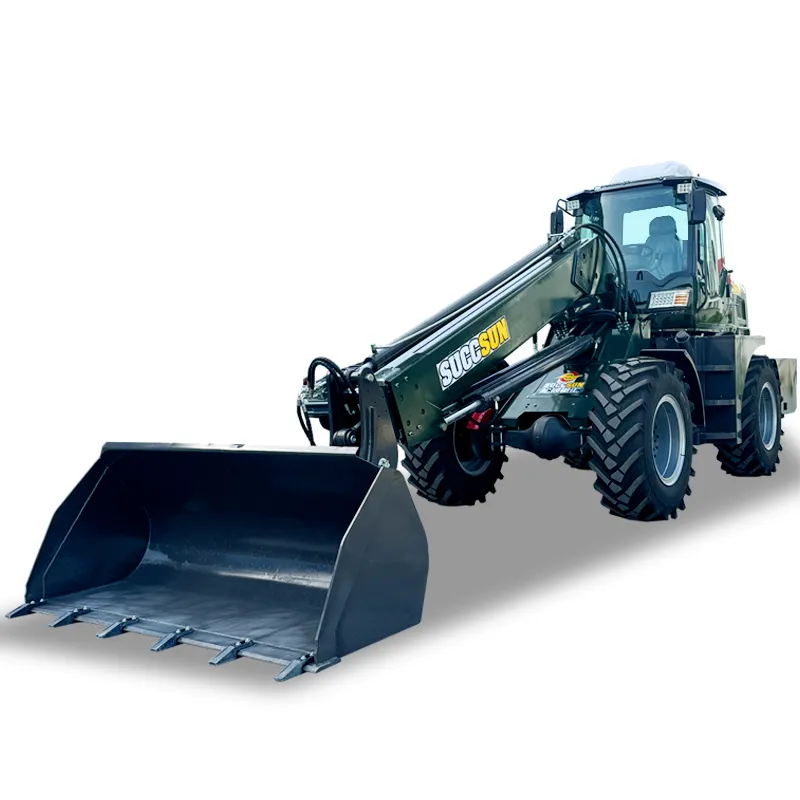
The Evolution and Rise of the Electric Loader in Modern Construction
How battery-powered construction equipment is transforming job sites
Around 40 percent of indoor demolition work worldwide is now done with electric loaders these days. These machines cut out all those pesky diesel fumes and still manage to lift between 3,500 to 5,000 pounds just like their old fashioned counterparts. Many contractors have noticed projects getting finished about 30% quicker in places like warehouses and when remodeling stores. The reason? Electric motors deliver torque instantly without all the waiting around for engines to warm up, plus there's way less time spent on maintenance breaks. Getting rid of the need for fuel tanks and those complicated particulate filters has completely changed how people set up job sites. Urban areas with tight spaces benefit especially well from this shift since everything runs smoother and takes up less room on already crowded construction zones.
Growth trends in electric compact utility loaders (2018–2024)
The market has been expanding pretty fast actually growing at around 22% compound annual rate until 2023 according to latest industry reports. Most of this growth comes from Asia Pacific countries which account for nearly 60% of total demand worldwide. Several factors are pushing this expansion forward. First there are those tighter rules about indoor air quality now enforced in seventeen different US states. Then we see operators saving money over time since these units cost about 34% less to run throughout their lifespan compared to traditional diesel models. And finally many European Union cities offer financial encouragement too typically giving out around seven thousand five hundred dollars per electric machine purchased by local governments.
Advancements in electric loader technology by industry leaders
Manufacturers who are pushing boundaries have managed to hit around 8 hours of runtime using batteries without cobalt, and these work well in temperatures ranging from minus 20 degrees Celsius all the way up to 50 degrees. One major company from China came up with this cool modular chassis idea that cuts down on how long it takes to replace parts by about two thirds when compared with what was available back in 2018. What makes these advancements so great is they fix this problem where heavier loads require bigger machines but still manage to pack 1.5 tons worth of stuff into something under 72 inches wide. That kind of size really matters when trying to get equipment through narrow stairwells or into cramped indoor areas.
Compact Low-Body Design: Engineering Electric Loaders for Confined Access
Key Features of Narrow Frame and Low-Profile Design for Indoor Use
Electric loaders today have been designed to take up less vertical space compared to their diesel counterparts, typically standing 15 to 20 percent shorter. This means they can work comfortably even when there's only around 72 inches of headroom available, without sacrificing lifting power something that makes all the difference during HVAC work or when tackling those tricky basement projects. The manufacturers have also introduced some clever design tweaks like narrower rear ends that cut down on overall bulk by about 18%, plus placing the operator seat right in the middle of things. These changes really help workers navigate tight spaces better and see what's going on around them clearly, especially important in confined areas where every inch counts.
| Feature | Electric Loader (2024 avg.) | Diesel Loader | Advantage |
|---|---|---|---|
| Overall Height | 69-74" | 82-87" | 17% reduction |
| Turning Radius | 42-48" | 66-72" | 36% tighter |
| Ground Clearance | 6.5" | 8.2" | 26% lower profile |
Dimensional and Clearance Advantages Over Traditional Diesel Loaders
New electric models can now fit through door frames as narrow as 36 inches thanks to special hinges that pull back the wheels when turning. This makes moving from loading areas into buildings much smoother something that 68 percent of contractors mentioned as a big problem in last year's AEM survey. Putting batteries on the sides instead of the front cuts down on total width by around 8 to maybe even 12 percent compared with older diesel machines that have engines upfront.
Optimized Weight Distribution for Stability and Ceiling Clearance
By concentrating 72% of mass within the wheelbase—versus 58% in diesel models—electric loaders maintain stability when lifting 1,200–1,800 lb loads, even on inclines up to 15°. This centralized weight distribution, validated under ISO 12100-2:2023 safety standards, minimizes rear tipping risks in low-clearance settings.
Superior Maneuverability in Tight Spaces: The Electric Loader Advantage
Zero-Tail Swing and Minimal Turning Radius in Electric Loader Models
The zero tail swing design gets rid of that annoying rear overhang when rotating, so operators can turn right next to walls without getting stuck and still have complete control over the bucket. These machines actually manage to make turns within just under six feet radius area, which is about 40 percent better than what regular diesel loaders can do. That means they fit through really tight spaces too, like those 8 foot wide aisles in warehouses. A recent report from the Material Handling Institute back in 2023 showed something pretty impressive though. Electric loaders managed to save workers almost three quarters of their time spent moving around inside cramped storage areas compared to older equipment types.
Real-World Applications in Interior Demolition and Flooring Projects
Three scenarios highlight their spatial advantages:
- Flooring retrofits: Transporting ceramic tiles through 90° stairwell turns in multi-story renovations
- Historic building demolition: Removing plaster debris from 1920s row houses with 84-inch ceiling clearances
- Mechanical room upgrades: Positioning HVAC components in basements with 7-foot overhead obstructions
Operators note 22% faster cycle times in these applications due to fewer maneuvering corrections.
Case Study: Retrofitting a Warehouse Using Compact Electric Loader Maneuverability
In the middle of updating a warehouse in Chicago, workers had to navigate through existing 108 inch wide storage aisles without lowering those original 96 inch ceilings. The electric loader came in handy here since its bucket sits at just 58 inches when carrying things, which means it can move safely under the sprinkler system without any issues. Plus, operators get around 210 degrees visibility from their seat, so they rarely bump into anything stored nearby. According to what project managers told us, these features saved them about $140,000 because they didn't have to take down all those racks temporarily during the work. Just goes to show how something small like machine size really makes a difference on big projects like this one.
Battery-Powered Efficiency: Comparing Electric and Diesel Loader Performance
Energy Efficiency Metrics of Leading Electric Loader Units
Electric loaders deliver 2.5x greater energy efficiency than diesel models, converting 75–80% of stored battery power into usable work versus just 30–35% in internal combustion engines (Sustainable Transport Trends 2024). Advanced thermal management reduces energy loss during heavy lifts by 18%, while regenerative braking recovers 12–15% of expended energy during descent phases.
Charging Infrastructure Needs on Mixed-Equipment Construction Sites
Dual-voltage charging stations (480V/240V) support 80% battery recharge in 45 minutes, minimizing disruption to mixed-fleet operations. A 2024 construction site analysis found that staggered shift scheduling and predictive load management reduce required charging ports by 30%, optimizing infrastructure use across diverse equipment types.
Emissions and Air Quality: Electric vs. Diesel in Enclosed Environments
Electric models eliminate 4.2 metric tons of CO2 emissions per 1,000 operating hours compared to diesel units—critical in interior spaces where EPA studies show particulate levels drop 92% when battery-powered equipment replaces combustion engines.
Addressing the Payload Limitation Paradox in High-Demand Indoor Applications
Though electric loaders typically offer 15–20% lower payload capacity, their precision controls enable 93% first-attempt load placements—compared to 78% for diesel models—reducing cycle times by 22% in tight spaces according to warehouse retrofit data.
Strategic Applications in Interior Construction and Renovation
Efficient Debris Removal in Multi-Story and Confined Building Interiors
Electric loaders handle 85% of interior demolition waste removal in urban high-rises, navigating standard 36-inch doorways and freight elevators to achieve 40% faster debris transport than manual methods. Operators can clear 2–3 tons per hour in areas inaccessible to larger machinery.
Integration with Dust-Free and Low-Disruption Flooring Renovation Workflows
Manufacturers have optimized electric models for flooring replacement projects requiring minimal airborne contaminants. With zero exhaust emissions and noise levels below 75 dB, they are ideal for hospitals, offices, and occupied retail spaces. Research shows these loaders reduce worksite particulate matter by 62% during tile removal compared to gas-powered alternatives.
Enhanced Operator Safety, Visibility, and Noise Reduction Indoors
Low-body designs improve operator visibility by 30% through minimized hood obstruction and optimal load positioning. Integrated 360° LED lighting enhances spatial awareness in poorly lit interiors, while vibration levels remain under 2.5 m/s²—compliant with ISO 28927-11 standards for extended shift safety.
Why Demand Continues to Grow Despite Smaller Payload Capacity
Electric loaders might carry about 15 to 20 percent less weight compared to their diesel counterparts, but they're becoming the go to choice for tight indoor jobs where space is limited. Across Europe, folks working on restoring old buildings have seen nearly a third more electric machines hitting job sites year after year. These projects really need those zero emissions and minimal disturbance during sensitive restoration work. Most contractors find ways around the lower payload capacity because these electric models complete tasks almost three times quicker thanks to that immediate power delivery and how easily they can maneuver into spots that bigger machines just cant reach.
Frequently Asked Questions
Why are electric loaders becoming more popular in construction?
Electric loaders are favored due to their zero emissions, lower operational costs, and ability to navigate tight spaces efficiently. They are becoming essential as regulations around indoor air quality tighten and industries move towards sustainable practices.
How do electric loaders compare to diesel loaders in terms of energy efficiency?
Electric loaders are about 2.5 times more energy-efficient than diesel models, converting a larger percentage of stored battery power into usable work. They also feature regenerative braking systems that help recover energy, further enhancing efficiency.
What are the operational advantages of using electric loaders on construction sites?
Electric loaders offer significant advantages such as zero-tail swing for better maneuverability in tight spaces, lower noise levels, and reduced maintenance requirements. They also enhance operator safety with improved visibility and lower vibration levels.
Are there any limitations to using electric loaders?
One limitation is their lower payload capacity compared to diesel loaders. However, their precision controls and faster cycle times offset this limitation in indoor settings where maneuverability and zero emissions are prioritized.
Table of Contents
- The Evolution and Rise of the Electric Loader in Modern Construction
- Compact Low-Body Design: Engineering Electric Loaders for Confined Access
- Superior Maneuverability in Tight Spaces: The Electric Loader Advantage
- Battery-Powered Efficiency: Comparing Electric and Diesel Loader Performance
- Strategic Applications in Interior Construction and Renovation
- Frequently Asked Questions