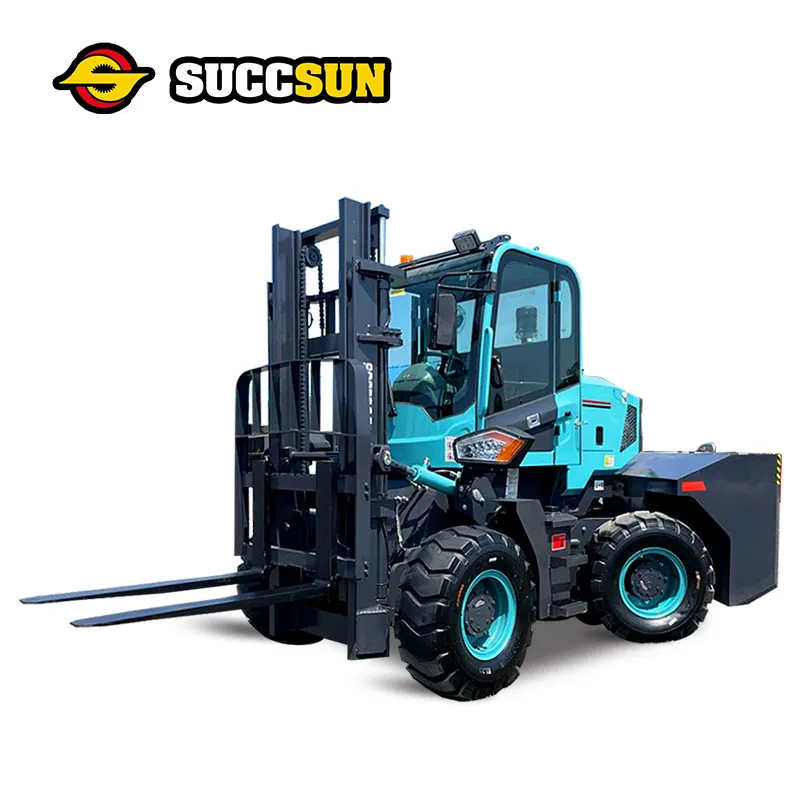
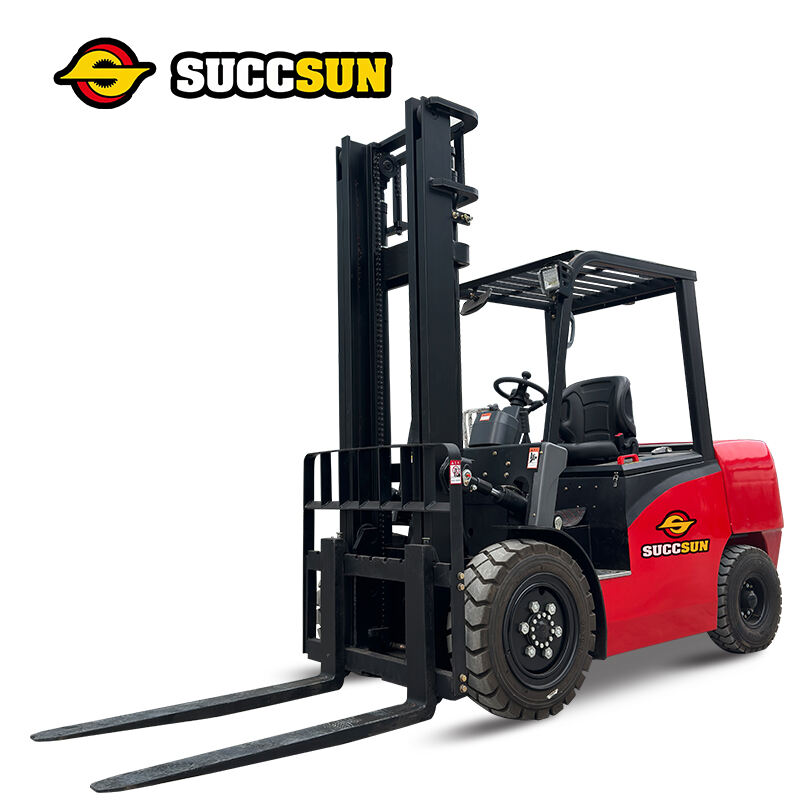
For industries that require reliable and safe transportation of heavy loads on uneven, slippery, or soft terrain, 4-wheel drive (4WD) forklifts are not merely alternatives to standard forklifts but rather critical solutions for enhancing productivity. The application prospects for such forklifts are vast and demand is steadily growing, with their core advantage lying in the exceptional maneuverability, traction, stability, and load-bearing capacity they offer—perfectly addressing the limitations of standard warehouse forklifts on unpaved surfaces.
On construction and heavy infrastructure sites, where muddy soil, gravel piles, uneven foundations, and temporary steep slopes are common, 4WD forklifts ensure the stable transportation of various heavy construction materials (steel, pipes, precast components), building materials, and equipment modules, effectively preventing vehicles from getting stuck and ensuring that construction schedules are not affected by rain or snow. Agriculture and livestock farming also rely on these forklifts to tackle challenging environments such as muddy field ridges and pastures, fertilized soil, silage piles, and steep orchard slopes. They can safely and efficiently handle large quantities of feed bags, seed/fertilizer pallets, large hay bales, and heavy agricultural machinery parts. In forestry, sawmills, and lumberyards, wood chip piles, slippery wood chip surfaces, logging sites in pristine forests, and rugged terrain filled with gravel pose extreme demands on forklift stability and maneuverability. 4WD forklifts are the reliable solution for transporting logs, timber piles, and machinery within these harsh conditions.
In industries such as mining, quarries, and aggregate processing, operations often take place on loose gravel piles, slippery mineral slopes, rugged transport roads, and areas prone to spills. Excellent traction is critical for safety and efficiency, and 4WD forklifts can reliably handle the transportation of heavy mining components, tools, spare parts pallets, and maintenance equipment in such environments. In recycling facilities and waste treatment stations, operating environments often involve slippery cement floors, smooth areas near compactors, steep slopes at transfer stations, and waste piles. 4WD forklifts significantly enhance safety and operational efficiency when handling heavy recycling material bundles (paper, plastic, metal), turnover containers, and large waste items. Even in large garden centers and landscaping projects, 4WD forklifts are utilized to handle paving stone pallets, bagged soil/root protection materials, large trees/rocks, and heavy nursery stock on soft topsoil, root protection piles, sandy areas, partially leveled earthworks, and nursery zones prone to muddy conditions, while avoiding damage to fragile surfaces.
The factors driving the sustained growth in demand for 4WD forklifts are diverse: global infrastructure investment continues to grow, driving demand for such high-adaptability site equipment; projects increasingly require continuous site operation efficiency to avoid costly downtime losses caused by equipment breakdowns; increasingly stringent safety regulations emphasize the need for rollover stability when operating on slopes and uneven terrain; Ensuring reliable operation under adverse weather conditions such as rain, snow, and mud throughout the year to minimize downtime; and the need to handle heavier and denser pallets in modern logistics, which requires forklifts to have corresponding load-bearing capacity and strong ground traction to ensure safe handling.
In summary, when faced with complex working conditions, 4-wheel drive forklifts have become an indispensable solution for many industries. They break through terrain limitations, extending efficiency, safety, and reliable operation to areas unreachable by conventional forklifts. Their strong application prospects are the best testament to their core value—ensuring that critical industries can achieve efficient, safe, and uninterrupted heavy-duty material handling operations even in the most challenging environments.
 EN
EN