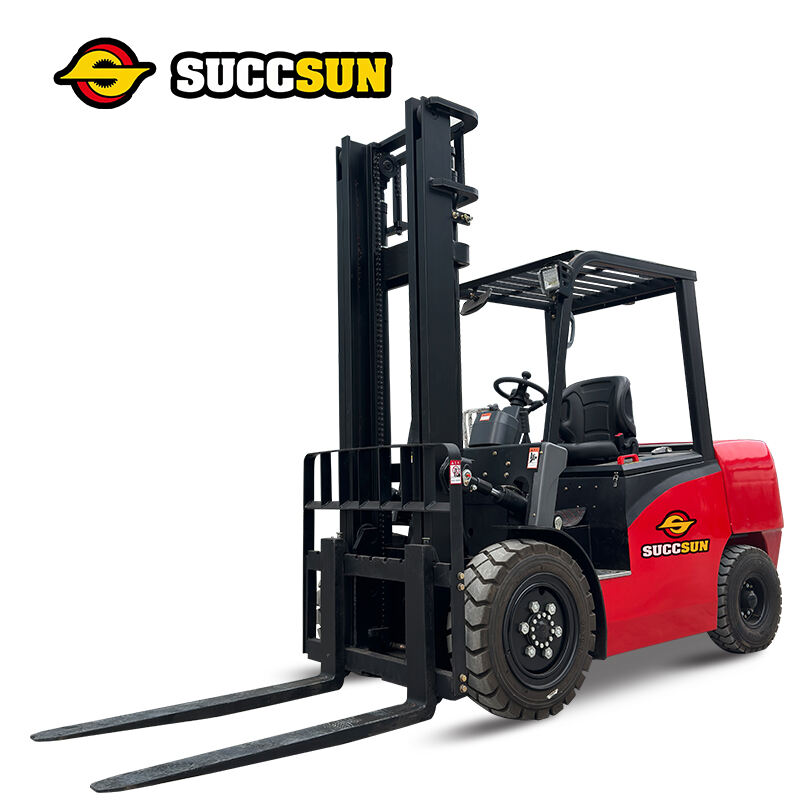
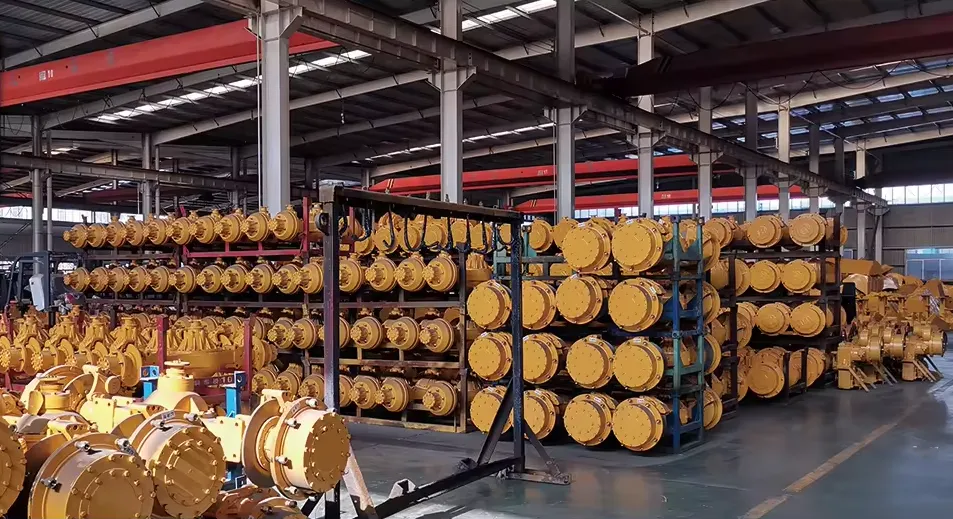
The core value of four-wheel drive forklifts: the key to conquering extreme terrain
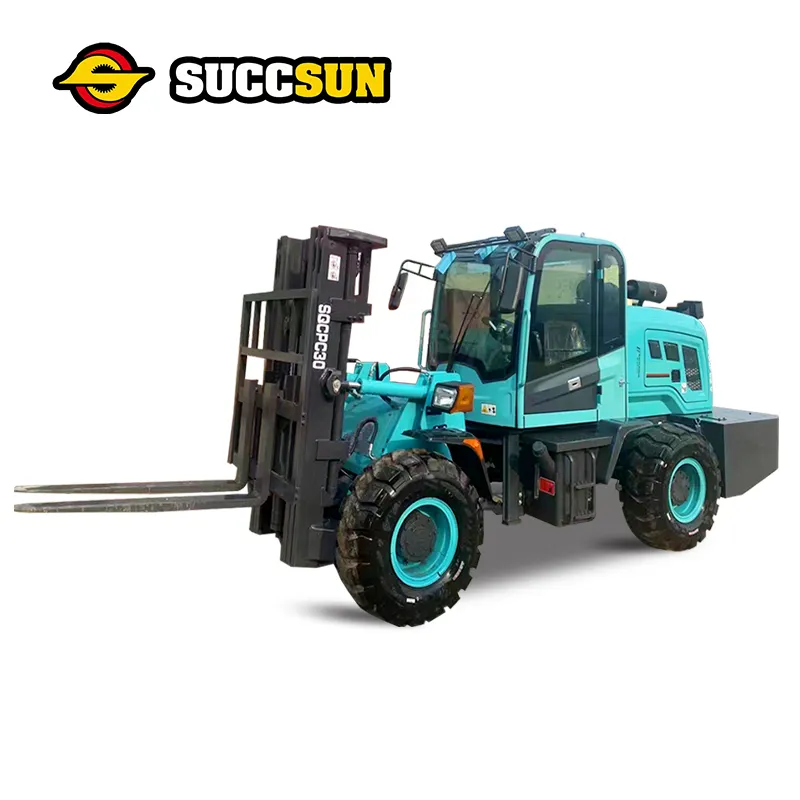
Four-wheel drive forklifts are not simply an upgrade of ordinary material handling equipment, but rather an engineering revolution designed for rugged terrain and harsh environments. While traditional two-wheel drive forklifts struggle to move in muddy, sandy, steep, or icy conditions, the four-wheel drive system enables the forklift to continuously climb slopes of up to 25% through all-wheel power distribution and differential lock technology, completely resolving the pain points of construction site shutdowns and interrupted farm operations. Its rigid chassis and corrosion-resistant structure can withstand impacts from碎石 and chemical corrosion, resulting in a 50% or more increase in service life compared to two-wheel drive forklifts in high-wear environments such as mines and ports, directly reducing long-term maintenance costs for businesses.
Dual breakthroughs in safety and efficiency
The core competitiveness of four-wheel drive forklifts lies in redefining safety boundaries. Their low center of gravity structure and adaptive hydraulic system significantly reduce the risk of overturning during slope operations, maintaining stability even when handling unstable loads such as logs, liquid drums, or irregularly shaped building materials. Additionally, the intelligent traction control system detects wheel slippage in real time and automatically distributes torque in rainy or snowy conditions to prevent cargo spills caused by tire spin. For industries like forestry and waste management that frequently encounter slippery environments, this translates to a 90% reduction in slippage accidents and ensures continuous operation in high-risk areas.
Transformative Value Across Multiple Scenarios
Four-wheel drive technology breaks through physical limitations in work scenarios. A single machine can seamlessly switch between paved roads and undeveloped areas—using energy-efficient two-wheel drive mode on warehouse hard surfaces and immediately activating all-wheel drive when entering off-road terrain. This flexibility enables construction companies to transport steel beams on muddy sites after heavy rain, helps farmers safely transport feed on steep slopes, and assists energy companies in maintaining facilities on permafrost in polar regions. Statistics show that companies adopting four-wheel drive forklifts have reduced their investment in backup equipment by an average of 30%, while eliminating production downtime caused by equipment replacement.
The Invisible Engine Driving Industrial Transformation
From agriculture to new energy, four-wheel drive forklifts are becoming infrastructure-level tools for industrial upgrading. In large-scale infrastructure projects, they ensure the precise installation of wind turbine blades in high-altitude mountainous areas; in the field of smart agriculture, their chassis platforms can be equipped with drone modules to achieve automated field inspections; and they are driving innovation in the waste management industry, enabling garbage collection vehicles to efficiently collect fully loaded containers in hilly communities. With the widespread adoption of modular design, users can expand hydraulic attachments (such as fork rotators and cylinder clamps), enabling a single four-wheel-drive forklift to perform tasks that previously required multiple devices working in tandem.
 EN
EN