 EN
EN

Core Engineering Advantages of the 468EV Skid Steer Loader for Pipeline Work
Zero-emission electric-hydraulic powertrain for safe, silent, and emission-free confined-space operation
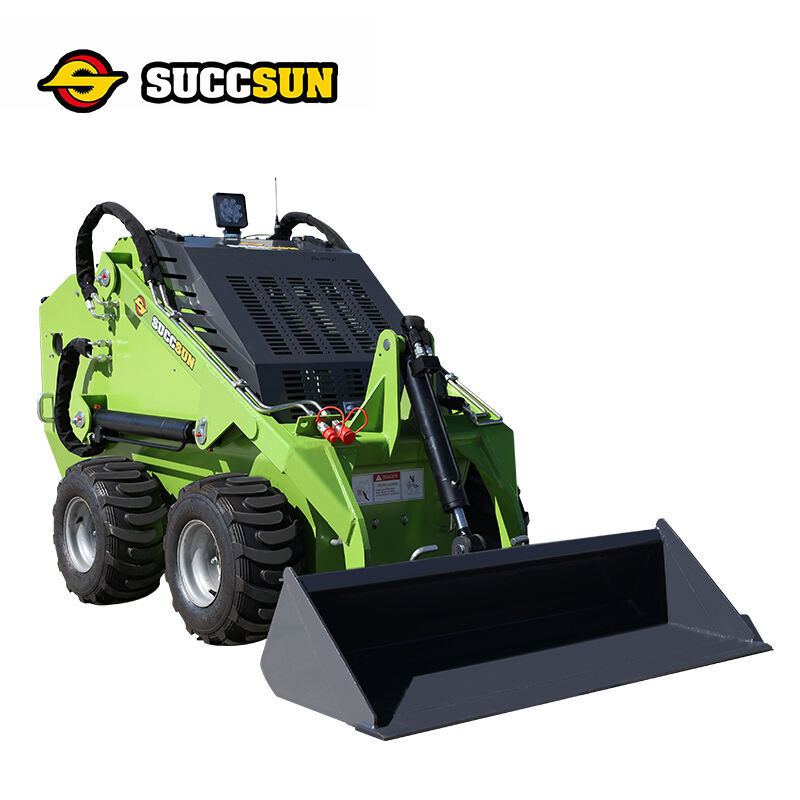
The 468EV Skid Steer Loader comes equipped with an electric-hydraulic powertrain that gets rid of all those annoying exhaust emissions. This makes it really important when working on desilting jobs in tight spaces where there's not much air circulation. The machine runs almost silently at around 65 decibels or lower, so workers can actually hear each other talk without shouting over loud engine noise. Since there's no traditional combustion engine involved, we don't have to worry about dangerous fumes building up inside trenches anymore. That means safer conditions overall and helps meet those OSHA standards for entering confined spaces. What's more, the battery powered system keeps delivering steady hydraulic power throughout long workdays. Workers won't experience the usual power loss that happens with diesel machines when they're pushing hard against heavy loads.
Ultra-compact 1.98 m width and 360° visibility—designed for precise trench-adjacent maneuvering and tight access
The 468EV is only about 1.98 meters across, which means it can get really close to those active pipeline trenches where regular equipment simply can't go. The machine comes with a completely glass front cabin that gives operators almost total visibility around them. They can actually see what's happening at the edge of the bucket, check out the sides of the trench, and keep track of where attachments are positioned as they work. Even when lifting materials all the way up, the low profile boom design keeps things visible. And there's this special radial lifepath system too, allowing for roughly 170 degrees of movement so workers can place items with incredible accuracy right down to the centimeter level in tight spaces between utilities.
1,850 kg operating capacity with high-torque hydraulic flow—enabling demanding desilting attachments
With a hydraulic flow rate of 136 liters per minute at 248 bar pressure, the 468EV can power serious desilting equipment without needing extra pumps. The machine boasts an impressive 1,850 kg operating capacity which keeps things steady when moving heavy sediment buckets around, even when conditions get tricky on hillsides or rough ground. What really stands out though are those high torque electric motors that kick in instantly for tough jobs such as hydro excavation where water jets need to work alongside vacuum systems at the same time. These motors maintain their strength across different load conditions so they don't stall during operation, allowing for uninterrupted cleaning processes especially important when dealing with frozen sediments that require extra breaking force.
Specialized 468EV Skid Steer Loaders Attachments for Effective Pipeline Cleaning
High-pressure hydro-excavation booms (up to 4,000 psi) with real-time flow and pressure monitoring
High pressure hydro excavation booms integrated into modern equipment can produce water jets reaching around 4,000 psi. These jets have enough punch to break apart compacted silt and scale deposits while still being gentle enough not to harm older pipes. Operators see real time readings for water flow and pressure right inside their cabin dashboard. With these numbers at hand, they can tweak the system's output as needed depending on what kind of sediment they're dealing with and how old or worn down the pipes actually are. The whole system works like a feedback loop that stops too much pressure from building up in weak spots of the pipeline network. Plus, companies report saving roughly 18 percent on water usage when switching from traditional fixed output systems to this smarter approach.
Vacuum-assisted slurry recovery buckets with capacity and on-board sediment separation
The vacuum assisted slurry recovery buckets come with about 0.8 cubic meters capacity which makes them great for quickly pulling out debris right after hydro excavation work. They have this dual phase suction system that really gets those wet sediments out fast. Plus there's built in separation technology onboard that separates solid material from the slurry as it's being recovered. The result? Around 40% less waste going off site, so operators can reuse water instead of constantly dumping it. No more stopping work to manually dispose of stuff either, which keeps everything running smoothly. And best of all, all those contaminants stay contained inside the system throughout the whole process.
Proven Field Performance: How 468EV Skid Steer Loaders Deliver Efficiency in Real-World Pipeline Maintenance
Municipal validation: 32% faster desilting cycles vs. conventional excavators on Shandong Provincial Water Authority project
In the Shandong Provincial Water Authority's canal work last year, they found that their 468EV machines cleaned out sediment about 32 percent quicker than regular diesel excavators. Why? Because these electric models deliver power right away and can move around much better in tight spaces where lots of pipes run through city areas. According to the Municipal Pipeline Efficiency Report from 2024, running these electric units actually cut down on expenses by roughly 14%. Plus there are no harmful particles coming out during operation which makes them really good choice for neighborhoods and places where environmental protection matters most.
Oil & gas application: Reduced downtime and zero emissions compliance on offshore-adjacent pipeline corridor maintenance
One major energy company managed to reduce unexpected downtime by nearly 20% after switching to 468EV loaders for maintaining their coastal pipeline corridors. The electric powertrains on these machines resist corrosion from saltwater, which means they don't suffer from the kinds of breakdowns that plague diesel equipment in similar environments. Plus, since they produce no emissions at all, they easily meet those tough regulations required for work offshore. Field workers have been able to get sediment cleared out during those tight 55 minute tidal windows regularly now. They're moving about 8.3 tons per hour compared to just 6.1 tons when using older loader models, making operations much more efficient overall.
FAQ
What is the key advantage of the 468EV Skid Steer Loader compared to diesel models?
The 468EV Skid Steer Loader offers zero-emission operation, reducing exhaust emissions and noise while maintaining steady hydraulic power for extended work periods.
How does the 468EV Skid Steer Loader handle tight access areas?
With its compact 1.98 m width and 360° visibility design, it allows operators to maneuver precisely in trench-adjacent spaces and tight areas.
Can the 468EV handle heavy-duty desilting equipment?
Yes, the loader provides a hydraulic flow rate of 136 liters/minute and maintains high torque even under tough load conditions for efficient desilting operations.
What is the benefit of the vacuum-assisted slurry recovery buckets?
The buckets facilitate fast debris removal after excavation work and include technologies to separate sediment, reducing waste production and promoting water reuse.
Table of Contents
-
Core Engineering Advantages of the 468EV Skid Steer Loader for Pipeline Work
- Zero-emission electric-hydraulic powertrain for safe, silent, and emission-free confined-space operation
- Ultra-compact 1.98 m width and 360° visibility—designed for precise trench-adjacent maneuvering and tight access
- 1,850 kg operating capacity with high-torque hydraulic flow—enabling demanding desilting attachments
- Specialized 468EV Skid Steer Loaders Attachments for Effective Pipeline Cleaning
- Proven Field Performance: How 468EV Skid Steer Loaders Deliver Efficiency in Real-World Pipeline Maintenance
- FAQ