 EN
EN


The Magnetic Vulnerability of Standard Skid Steer Loaders
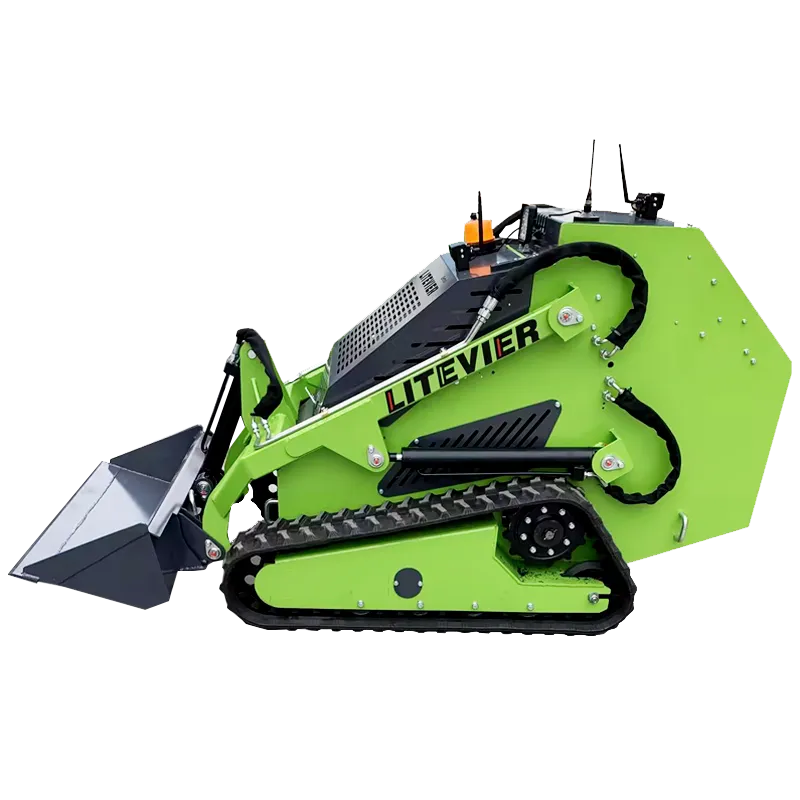
How EMI Disrupts Hydraulic Controls and Electronic Monitoring in Conventional Skid Steer Loaders
EMI problems really mess with important parts of regular skid steer loaders in two main ways. The first issue happens with those hydraulic control circuits that rely on these low voltage solenoid signals. When they get hit by magnetic fields stronger than about 10 gauss, the signals start getting distorted. What does this mean? Valves act all over the place, pressure plummets, and sometimes the bucket just moves without anyone telling it to. The second big problem comes from all those sensors watching things like how weight is distributed, what the hydraulic temps are doing, and where the attachments actually are. These sensors send back messed up data when there's EMI around. Take proximity sensors near metal parts for instance they often go crazy and think something is blocking the way when really it's just those magnetic fields messing with their settings. And guess what? About 42% of all hydraulic failures we see in places where EMI is common come down to these corrupted signals. Regular loaders without proper protection like Faraday shields or twisted pair wiring stay at risk even from not so strong electromagnetic fields.
Real-World Failures: Excavation Near MRI Suites, Substations, and Research Labs
MRI facilities create problems for nearby equipment since their static magnetic fields above 1.5 Tesla can completely wipe out important parts such as alternator rotors. Substations face similar issues where sudden electrical changes cause dangerous voltage surges in control wiring, often leading to unexpected shutdowns right in the middle of trench digging work. Labs dealing with particle accelerators have seen about 50-60% more unplanned stoppages whenever regular loading equipment gets too close. All these real world problems clearly show why traditional design approaches just don't cut it anymore in areas with strong electromagnetic activity.
Core Engineering Solutions for Magnetic-Field Resistant Skid Steer Loaders
Faraday Shielding, EMI-Optimized Harnessing, and Non-Ferrous Structural Integration
Skid steer loaders designed to resist magnetic fields need proper EMI protection in three main areas. Operator cabins and control sections get Faraday cage treatment through continuous conductive meshing, which stops outside fields above 100 A/m - meeting those IEC standards for industrial equipment. The wiring inside these machines uses twisted pair designs wrapped in double layer shielding, cutting down on unwanted current induction by almost 95% compared to regular installations. What really makes these machines work well near strong magnetic sources is how they build their frames and booms from non-ferrous materials like aluminum composites instead of steel. This approach prevents magnetic hysteresis issues that mess with hydraulic valves when operating close to things like MRI machines or other powerful field generators found in medical facilities and research labs.
EMI-Resistant Sensor Calibration and Redundant Control Logic Design
To deal with electromagnetic interference, sensor systems go through pretty intense conditioning processes. They combine firmware based noise filtering techniques with physical separation methods. When pressure sensors are placed close to hydraulic actuators, they rely on differential signaling which helps block out unwanted interference signals. Position sensors meanwhile incorporate special algorithms called hysteresis compensation to smooth out readings. For control systems, there's something called triple modular redundancy in play here. Basically, three separate microcontrollers constantly check each other's work. Should one get messed up by electromagnetic noise, the system just switches over to whatever the other two agree on. This multi layer protection strategy keeps things running smoothly even when unexpected electrical disturbances hit the field. And let's face it, nobody wants expensive equipment shutting down unexpectedly at critical locations like power substations or scientific research centers.
Validating Performance: Compliance Testing and Field Reliability of Magnetic-Field Resistant Skid Steer Loaders
IEC 61000-4-8 Certification at 100 A/m and Uptime Benchmarking Across EM-Critical Sites
Ensuring electromagnetic resilience for skid steer loaders involves two main checks: first getting certified in the lab, then verifying how they perform out in real world conditions. According to the IEC 61000-4-8 guidelines, equipment needs to withstand 100 A/m magnetic fields similar to what might be found around MRI machines or electrical substations. During these tests, operators watch closely to make sure the hydraulics stay accurate and all sensors continue working properly without any glitches. After passing certification, manufacturers track machine uptime at locations where electromagnetic interference is a known issue. These sites often include manufacturing plants with heavy machinery or areas near power transmission lines where regular maintenance checks become absolutely essential for safety and operational continuity.
- Medical facilities with adjacent MRI operations
- Power transmission hubs with 500kV+ transformers
- Research laboratories generating pulsed fields above 50 T
Real world testing shows that skid steer loaders meeting IEC standards stay running at about 99.4% uptime when working in these conditions. These machines experience roughly 94% fewer problems related to electromagnetic interference than their non-shielded counterparts. The reason behind this impressive performance lies in several layers of protection built into the design. For instance, Faraday cages effectively stop those pesky low frequency signals below 1kHz from messing things up. At the same time, special sensors optimized for EMI keep their calibration spot on, staying within just half a percent error even after long periods of exposure. When equipment keeps running smoothly without unexpected breakdowns, it saves companies massive amounts of money too. We're talking about avoiding delays that could cost upwards of seven hundred forty thousand dollars every single day. That's why checking for compliance isn't just good practice anymore it's absolutely essential for any major construction or infrastructure work happening close to sources of electromagnetic interference.
Strategic Deployment: Balancing Shielding Benefits with Operational Realities for Skid Steer Loaders
Weight, Power Efficiency, Service Access, and Total Cost of Ownership Implications
Adding magnetic field resistance to skid steer loaders comes with some pretty big tradeoffs that operators need to consider. The shielding stuff they put on these machines, things like non ferrous metals and those Faraday cage setups, actually makes the whole thing heavier by around 8 to 12 percent. That means less weight capacity for actual work and stronger undercarriage parts needed to handle the extra load. Another downside? Power efficiency takes a hit too. Shielded models lose about 15 to 20 percent efficiency because those EMI suppression systems keep pulling power from the alternator all the time. Mechanics will tell anyone who asks that working on these machines is a pain. Getting at the hydraulic parts inside takes anywhere from 30 to 50 percent longer than regular models. When looking at the bottom line, folks running these machines have to balance out the $18k to $25k price tag difference plus ongoing maintenance costs against what they gain in places where electromagnetic interference is everywhere, like near substations. And interestingly enough, for jobs right next to MRI facilities, operators actually see about 34 percent fewer downtime hours even though they're dealing with more restrictions during operation.
FAQ Section
What is EMI and how does it affect skid steer loaders?
EMI, or Electromagnetic Interference, affects skid steer loaders by distorting signals in hydraulic control circuits and disrupting sensors monitoring weight distribution and hydraulic temperatures. This can lead to equipment malfunctions.
What are some common failure modes for skid steer loaders in high-risk environments?
In environments like MRI suites, skid steer loaders can experience issues such as ECU shutdowns. In electrical substations, they might suffer from hydraulic valve lockups, while physics labs can face sensor calibration drifts.
How do engineered solutions make skid steer loaders resistant to electromagnetic fields?
Engineered solutions involve using Faraday shields, EMI-optimized harnessing with twisted pair designs, and constructing frames from non-ferrous materials to make skid steer loaders resistant to electromagnetic fields.
What are the trade-offs when adding magnetic resistance to skid steer loaders?
The trade-offs include increased weight due to shielding materials, reduced power efficiency, longer maintenance times, and higher total costs of ownership. However, these are often balanced out by reduced downtime in EMI-heavy environments.
Table of Contents
- The Magnetic Vulnerability of Standard Skid Steer Loaders
- Core Engineering Solutions for Magnetic-Field Resistant Skid Steer Loaders
- Validating Performance: Compliance Testing and Field Reliability of Magnetic-Field Resistant Skid Steer Loaders
- Strategic Deployment: Balancing Shielding Benefits with Operational Realities for Skid Steer Loaders
-
FAQ Section
- What is EMI and how does it affect skid steer loaders?
- What are some common failure modes for skid steer loaders in high-risk environments?
- How do engineered solutions make skid steer loaders resistant to electromagnetic fields?
- What are the trade-offs when adding magnetic resistance to skid steer loaders?