 EN
EN


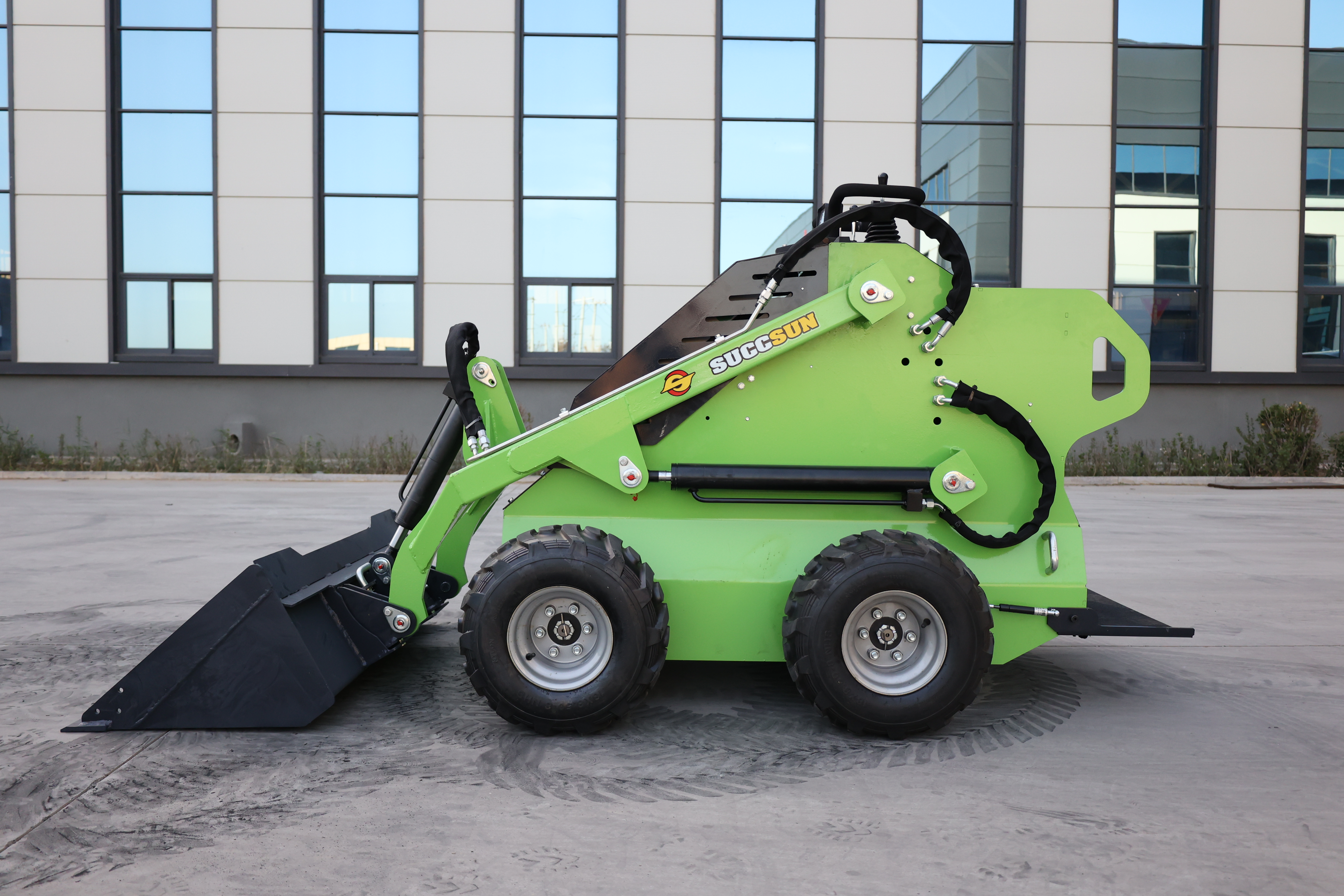
Power That Performs: Engine Output, Hydraulic Force, and Smart Powertrain Choices for the Skid Steer Loader
Horsepower, Breakout Force, and Lift Capacity — Measuring Real-World Skid Steer Loader Power
Horsepower (HP) reflects engine output—but real-world performance hinges on breakout force (upward lifting power at the bucket lip) and rated lift capacity. Exceeding either risks hydraulic system strain, premature wear, or stalled workflows. Skid steers are broadly categorized by frame size and capability:
- Small-frame (40–60 HP): 800–1,600 lbs lift capacity; suited for light grading, landscaping, and confined-space cleanup
- Medium-frame (60–90 HP): 1,600–2,200 lbs lift; balances versatility and power for general construction and material handling
- Large-frame (90–120+ HP): 2,200–4,000 lbs lift; built for demanding tasks like trenching in compacted soil or loading heavy aggregate
Breakout force typically exceeds lift capacity by 20–30%, enabling safe engagement with dense or frozen materials. For instance, excavation in hardpan or frozen ground demands ≥3,000 lbs breakout force—making large-frame models essential for such conditions. Matching these metrics to application—not just headline HP—ensures optimal productivity and equipment longevity.
Diesel, Electric, and Hybrid Powertrains — Matching Skid Steer Loader Power to Application and Sustainability Goals
When choosing powertrains these days, folks aren't just looking at horsepower anymore. They need to think about emissions standards, what kind of job the machine will actually do day to day, and how much it'll cost over time. Diesel engines still rule the roost for tough outdoor jobs because they pack serious low end punch and can handle long workdays without breaking down. Electric machines have come a long way too. Many can run all day on one charge now, which means no exhaust fumes hanging around inside buildings. That makes them great for places like warehouses where clean air matters, or cold storage areas where traditional engines would struggle. And let's face it, who doesn't want something that runs quietly? Operating costs drop by about 25% indoors compared to diesel. Then there are hybrids that mix both technologies. These smart systems switch between diesel and electric depending on the workload. Save fuel when moving from one job site to another, but kick in full power when needed for heavy lifting tasks such as drilling through concrete or clearing snow piles.
Key differentiators:
- Diesel: Best for long-duration, high-intensity outdoor use where refueling infrastructure is available
- Electric: Ideal where emissions, noise, or ventilation constraints apply—and where charging access supports workflow
- Hybrid: Optimal for mixed-intensity applications (e.g., municipal grounds maintenance or landscape contracting) requiring both efficiency and responsiveness
The decision ultimately rests on job site logistics, regulatory mandates (e.g., California's CARB Tier 4 standards), and lifecycle analysis—not just initial purchase price.
Flexibility Defined: Universal Attachment Systems and Cross-Industry Skid Steer Loader Versatility
Quick-Attach Evolution: From Brand-Locked Couplers to ISO 24410-Compliant Universal Standards
Back in the day, skid steer attachments came with proprietary couplers that basically forced operators to stick with one brand's equipment, which drove up costs for entire fleets. Everything changed when ISO 24410 became the industry norm for attachment systems. What this international standard does is specify exact measurements for things like mounting plates, how wide the carriage needs to be, where pins should go, and the shape of hydraulic connections. The result? Machines from different manufacturers actually work together safely and reliably. Now most buckets, grapples, and stump grinders that meet ISO specs will fit on around 90% of newer skid steers right out of the box, no extra parts needed. Swapping attachments usually takes less than a minute these days, and nobody has to dig through their toolbox anymore. Contractors who switched to ISO compatible equipment tell us they're spending about 15-17% less money overall on attachments and spare parts. Basically, what used to be just another specialized piece of equipment has become something much more versatile for job sites everywhere.
Beyond Construction: Skid Steer Loader Applications in Municipal Snow Removal, Hydroseeding, and Demolition
Skid steer loaders are doing way more than digging holes these days. Standardized mounts plus decent hydraulic power (around 15 to 30 gallons per minute) make them versatile workhorses. Cities love using them during winter storms when they attach big snow blowers and plows. These machines can zip around corners and get into those tight spots between buildings where bigger trucks just won't fit. For landscaping jobs, folks slap on hydroseeding gear that sprays green stuff all over hillsides and places prone to erosion. Some companies report getting through five acres a day with pretty accurate seed mix distribution. Demolition teams also find creative ways to use skid steers. They bolt on heavy duty cutting tools to tear down old buildings in cramped city lots where regular excavators would struggle to turn around. And don't forget about forests either. Attach a mulcher to a tracked version and suddenly you've got a machine that eats through unwanted plants without wrecking the ground below. What makes this possible? Not fancy tech or complicated systems, but smart design choices and adaptable hydraulics that let operators swap out tools quickly depending on what job comes next.
Efficiency Engineered: Operator-Centric Design, Telematics, and Terrain-Optimized Mobility in Modern Skid Steer Loaders
Zero-Turn Agility, Compact Footprint, and Wheeled vs. Tracked Mobility for Variable Job-Site Conditions
The zero turn feature gives skid steer loaders their main edge when it comes to getting things done efficiently. These machines can spin around completely inside their own space, which makes all the difference in tight situations. Think about those crowded city construction zones, old buildings needing updates, or college campuses with lots of green spaces. Space gets really limited there, yet workers still need to get plenty accomplished. Even though these loaders are small in size, they don't lose out on lifting power or steadiness. The designers worked hard on making sure the weight sits just right and keeps the center of gravity low enough so operators feel confident even when working at height.
Mobility configuration is a strategic choice, not an afterthought:
- Wheeled models excel on paved or firm surfaces—offering travel speeds up to 12 mph and minimal surface impact, ideal for repetitive transport or site prep on asphalt or concrete
- Tracked variants reduce ground pressure by up to 30% (typically <5 psi), delivering superior flotation and traction in mud, sand, snow, or uneven terrain—essential for utility work, wetland restoration, or soft-soil excavation
Advanced suspension systems and ergonomic cab layouts further reduce operator fatigue during multi-hour shifts—directly supporting sustained productivity and safety.
Telematics Integration: How Data from Skid Steer Loaders Drives Labor Savings, Uptime, and ROI
Modern telematics transforms skid steer loaders from isolated machines into nodes in a connected operational network. Integrated sensors capture real-time data on engine health, hydraulic performance, fuel use, GPS location, idle time, and attachment utilization—delivering actionable intelligence through secure cloud platforms.
This data enables three high-impact outcomes:
- Labor optimization: GPS tracking and utilization analytics identify underused assets and inform smarter crew deployment—reducing redundant operator assignments across job sites
- Predictive maintenance: Early detection of abnormal vibration, temperature spikes, or hydraulic pressure deviations cuts unplanned downtime by up to 25% and extends component life
- ROI acceleration: Fuel consumption benchmarks, task-duration reporting, and comparative fleet analytics highlight inefficiencies—whether in routing, idle time, or attachment mismatch—enabling measurable cost recovery
Automated reporting compares performance against industry benchmarks, empowering managers to make decisions grounded in empirical evidence—not anecdote. The result is not just better-maintained equipment, but a demonstrably more efficient, accountable, and scalable operation.
FAQ
What is breakout force in skid steer loaders?
Breakout force refers to the upward lifting power at the bucket lip and is crucial for engaging dense or frozen materials safely.
What are the benefits of electric skid steer loaders?
Electric skid steer loaders produce no exhaust fumes, making them suitable for indoor environments and contributing to reduced operating costs.
Why are ISO 24410-compliant attachment systems important?
ISO 24410-compliant systems standardize attachment interfaces, allowing for compatibility across different brands and reducing overall costs on attachments and parts.
How does telematics improve skid steer loader operations?
Telematics provides real-time data on engine health and utilization, enabling predictive maintenance, labor optimization, and improved ROI through data-driven decisions.