 EN
EN


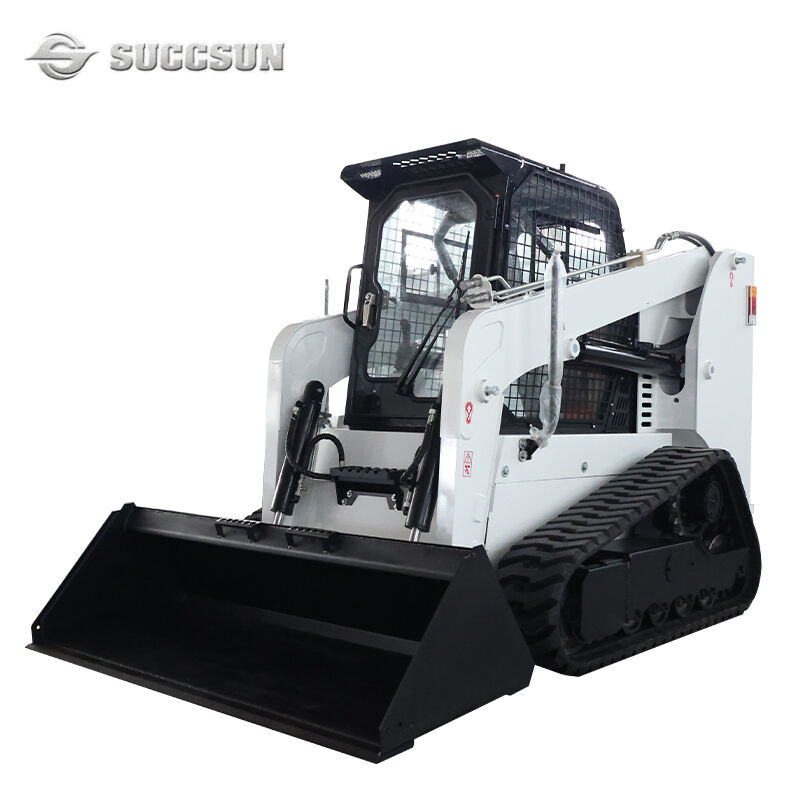
Skid Steer Loader: True Zero-Radius Turning for Unmatched Maneuverability
How independent hydraulic wheel control delivers precise zero-turn capability
What makes skid steer loaders so good at moving around tight spaces? It all comes down to how they control their wheels independently through hydraulics. Operators can actually make each wheel go different directions if needed. When the left wheel goes forward and the right one goes backward, the whole machine spins around its middle without taking up much room at all. This means no big sweeping turns required, which is why these machines are so valuable for working in crowded city construction sites, inside buildings being renovated, anywhere where there just isn't enough space for regular equipment. The top brands spend time fine tuning their hydraulic systems so that when operators need to pivot quickly, everything moves smoothly without too much resistance. Tests show this setup cuts down on tire wear by about 80 percent compared to older steering methods. Workers get pinpoint accuracy as they move past obstacles like walls or machinery, and this translates into getting more done faster in those cramped work conditions.
Turning radius comparison: Skid Steer Loader vs. compact track loader vs. mini excavator in sub-3m spaces
The zero-turn capability of skid steer loaders provides decisive advantages in spaces under 3 meters wide where competing equipment struggles with clearance and directional flexibility:
| Equipment Type | Minimum Turning Radius | Sub-3m Space Maneuverability | Pivot Flexibility |
|---|---|---|---|
| Skid Steer Loader | True zero-radius | Full 360° rotation | ★★★★★ |
| Compact Track Loader (CTL) | 0.9–1.2 meters | Limited repositioning | ★★★★☆ |
| Mini Excavator | 1.8–2.4 meters | Single-direction work only | ★★★☆☆ |
Compared to CTLs that need extra space for track movement or mini excavators limited by their boom swing and tail swing, skid steers can make tight turns right on the spot without needing to back up or move forward first. According to recent construction equipment studies from 2023, this maneuverability means jobs get done around 30% quicker in tricky spaces like narrow alleys, basements, and areas surrounded by fencing. What really stands out is how these machines can pivot entirely within their own footprint, something that makes them practically the best bet when working through gates less than 1.5 meters wide where bigger machinery simply won't fit.
Compact Frame and Optimized Operating Width
Standard (1.5–1.8m) and ultra-compact (<1.45m) operating widths — and why width matters for gateways, corridors, and indoor use
What makes skid steer loaders so good for tight spaces is basically their compact design. Most standard machines sit around 1.5 to 1.8 meters wide, which means they can squeeze through typical job site gates and those narrow alleyways that often block bigger equipment. When space gets really limited, there are special ultra compact versions that drop under 1.45 meters. These smaller units can actually get into places like basement entrances, old livestock barns, and buildings needing retrofits where changing the structure would cost extra money. The narrower body translates to better productivity on site because workers don't waste time finding alternate routes or having to widen doors just to get equipment inside regular sized door frames (which usually measure between 0.9 and 1.2 meters). Inside warehouses during demolition work, the tighter profile keeps accidental damage away from walls, storage racks, and other infrastructure elements. And contrary to what some might think, making the machine narrower doesn't make it unstable. The lower center of gravity combined with how the weight is distributed across the machine ensures safety remains intact even when working in super tight spots. Each reduction in width opens up new job opportunities while cutting down on the need for expensive access modifications at construction sites.
Superior Operator Visibility and Integrated Safety Controls
ROPS/FOPS cab design with pillarless rear windows and 360° sightlines for confident tight-space operation
Working a skid steer loader in tight spaces requires good visibility all around. The newer ROPS/FOPS certified cabs help out a lot with their pillarless back windows and those full 360 degree glass panels that cut down on those pesky blind spots when making those sharp turns. According to OSHA data from last year, these cab designs can actually shrink blind spots by as much as 40% in corridors under three meters wide, which makes spotting obstacles much easier. Many models now come with optional cameras too, letting operators keep track of where the bucket is, watch nearby walls, and spot anything hanging overhead while moving through narrow door frames or working inside buildings being torn down. Better visibility means fewer crashes on site too. We know from National Safety Council stats that about one quarter of accidents involving equipment in confined spaces happen because operators simply couldn't see what was going on around them.
Stability management systems that prevent tip-over during aggressive pivoting on uneven terrain
The integrated electronic stability management system helps manage those sideways forces that happen when machines pivot quickly on hills or rough ground covered in debris. The sensors are constantly watching for signs things might get unstable, like when the machine leans too far during sidehill work. As soon as they spot these problems, the ESM kicks in almost instantly, cutting back engine power and activating hydraulics to stabilize everything. This feature becomes really important when working with attachments lifted off the ground, such as pallet forks moving around in busy storage areas. Tip overs from these situations make up nearly a third of all major injuries involving skid steers. With ESM active, operators can still maneuver at decent speeds even across bumpy terrain with slopes up to about 15 degrees without losing control. Most construction crews find this makes their day to day operations much safer and gives them peace of mind knowing the machine won't suddenly flip over during tight turns.
Attachment Versatility That Maximizes Productivity in Confined Spaces
Quick-attach hydraulics enabling rapid, on-site swaps between grading buckets, trenchers, and pallet forks
Skid steer loaders become incredibly versatile tools for cramped work areas thanks to their standard quick attach hydraulic systems. Workers don't have to get out of the machine to swap from grading buckets to pallet forks or trenching attachments, which takes less than 90 seconds total. This really matters on job sites with limited space or where there are low hanging obstacles. According to recent industry data from the Construction Technology Report 2024, this capability saves about 45% of otherwise wasted time. Most major equipment makers design their machines to work with a wide range of attachments, making them essential for getting various jobs done efficiently without needing separate specialized machinery for each task.
- Grading buckets, for precise material spreading in gateways and tight entry points
- Low-profile trenchers, operating parallel to walls without requiring swing clearance
- Articulating grapples, removing debris around immovable obstacles
The system’s mechanical simplicity enhances reliability while minimizing hydraulic leaks—a key safety benefit in enclosed or indoor environments. This versatility directly addresses spatial limitations where traditional equipment would either require constant repositioning or fail to access the work zone altogether.
FAQ Section
What is a skid steer loader?
A skid steer loader is a compact, versatile machine with lift arms that can attach to a variety of labor-saving tools or attachments. It's designed for maneuverability and efficiency in tight spaces.
Why are skid steer loaders preferred in tight spaces?
Skid steer loaders are preferred for tight spaces due to their true zero-radius turning capability, compact design, superior visibility, and versatile attachment options.
How does the electronic stability management system improve safety?
The electronic stability management system improves safety by detecting potential tip-over situations and automatically adjusting engine power and hydraulics to stabilize the machine.
What types of attachments can be used with skid steer loaders?
A variety of attachments can be used, including grading buckets, low-profile trenchers, and articulating grapples, enhancing productivity without requiring separate machinery.