 EN
EN


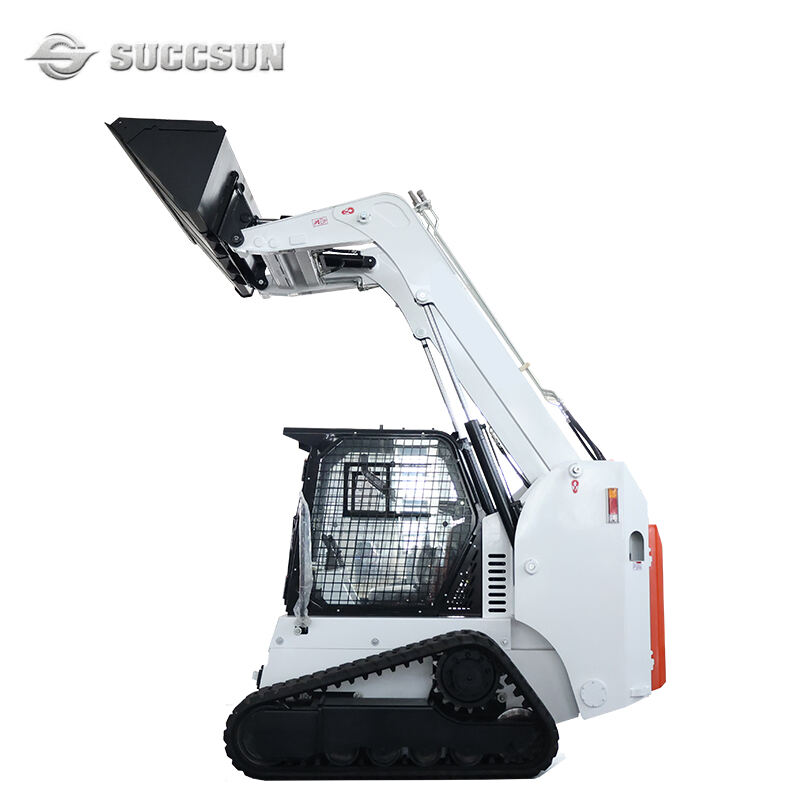
Core Skid Steer Loader Attachments for High-Impact Construction and Landscaping Tasks
Making a skid steer loader truly versatile comes down to picking the right attachments for the job. When it's about moving dirt and getting surfaces level, most pros turn to box scrapers because they handle those tasks so well. Land planers are another go-to tool, especially when dealing with tough ground conditions like compacted soil or rocky terrain. For taking down old concrete structures, nothing beats a good hydraulic hammer attached to the machine. These tools can boost productivity around 40 percent compared to what workers could achieve manually according to recent studies from Construction Efficiency Journal back in 2023. That kind of efficiency makes all the difference on tight deadlines.
Landscaping professionals prioritize attachments that accelerate repetitive tasks:
- Augers, which dig post holes up to five times faster than manual augers
- Brush cutters, clearing overgrowth three times faster than hand tools
- Soil conditioners, preparing uniform seedbeds in a single pass
These core implements extend machine capability far beyond basic buckets. A compact loader equipped with the right attachments handles everything from trenching and sod removal to tree transplantation—reducing reliance on multiple dedicated machines. This versatility directly accelerates project timelines and lowers capital and operational equipment costs.
Material Handling Mastery: Grapples, Buckets, and Hybrid Attachments for Adaptive Job Sites
Precision material handling is foundational to job site efficiency. Three attachment categories—grapples, buckets, and hybrid solutions—deliver unmatched adaptability across variable site conditions.
- Grapple Attachments excel with irregular, bulky loads like logs, boulders, or storm debris. Steel-tined models offer 270° rotation and secure grip, reducing manual handling by 40% in logging applications and accelerating debris clearance.
- Standard Buckets, with capacities ranging from 0.5 to 1.5 cubic yards, remain indispensable for high-volume transfer of soil, gravel, mulch, and aggregate. Curved-floor designs minimize spillage during transport and improve dump control.
- Hybrid Attachments, such as grapple buckets, integrate containment and gripping functions—ideal for mixed debris like construction scrap or brush-and-soil combinations. Operators report 30% faster loading cycles compared to switching between separate tools.
Selecting the right tool for the material—not just the task—prevents cross-contamination (e.g., using a clean bucket for topsoil after handling demolition rubble) and preserves workflow continuity. Contractors using purpose-matched attachments achieve 55% higher daily throughput than those relying solely on standard buckets.
Performance Comparison
| Attachment Type | Ideal Material | Time Savings |
|---|---|---|
| Grapple | Logs, boulders | 25–40% |
| Bucket | Soil, gravel | 15–30% |
| Hybrid | Mixed debris, scrap metal | 30–50% |
Fleets that rotate attachments based on task sequencing—not just availability—achieve 22% higher ROI, according to a 2023 equipment utilization study. Responsive material handling isn’t just about convenience; it’s a measurable driver of competitive advantage.
Ensuring Seamless Skid Steer Loader Attachment Compatibility and Quick-Attach Efficiency
When attachments don't fit right, it creates big problems for operations and safety on site. If the couplers aren't compatible, if the hydraulic flow isn't matching up (those GPM numbers matter!), or if something just can't handle the weight it's supposed to, then crews end up doing work over again, wasting time waiting for fixes, and facing expensive project delays that often slash productivity down around 30%. And let's not forget about the dangers. Bad fits lead to all sorts of issues like hydraulic fluid leaking out where it shouldn't, cracks forming in structures under stress, and worst case scenario - machines tipping over completely. These kinds of incidents made up almost 18% of all equipment accidents reported in last year's excavation safety data from 2024.
ISO vs. Universal Quick-Attach Standards: What Contractors Need to Know
Standardized mounting systems are non-negotiable for reliability and safety. ISO 14567-compliant couplers, now standard on most major-brand loaders—including Bobcat, CAT, and John Deere—enable tool-free swaps in under 90 seconds while maintaining certified pressure retention (<15 PSI drop). These systems ensure full interoperability across manufacturers without adapters or modifications.
“Universal” quick-attach solutions lack standardized testing and often require shims, spacers, or aftermarket plates—compromising stability, load distribution, and long-term wear. Contractors should verify three critical alignment points before deployment:
- Hydraulic flow specifications match the attachment’s GPM requirements
- Machine lift capacity exceeds the attachment’s operating weight
- Lock mechanisms feature ISO-compliant visual engagement indicators (e.g., color-coded pins or audible clicks)
Adopting ISO-aligned attachments reduces compatibility failures by 67%, extending both machine lifespan and return on investment (Equipment Interoperability Benchmark Report, 2023).
Maximizing ROI Through Strategic Skid Steer Loader Attachment Selection and Maintenance
When it comes down to it, picking the right attachments and keeping them well maintained is what turns those big equipment purchases into something worth the investment for contractors. Contractors who match their tools with tasks they do all the time see real benefits. Take grapples used constantly for cleaning up debris after storms or augers that get pulled out every time someone wants to install fences around properties. These kinds of regular uses can actually bump up how much these attachments get used by about 30 percent. On the flip side, when folks stick to regular maintenance schedules, attachments tend to last anywhere from two to three extra years in service. But skip those routine checks on hydraulic systems and forget about proper lubrication? Repair bills go through the roof pretty quickly, often jumping somewhere around 45% higher than they should be.
Matching Attachments to Common Job Site Workflows and Equipment Lifespan Goals
Optimize your fleet’s long-term performance by prioritizing:
- High-frequency utility: Buckets and pallet forks support daily material handling; specialized tools like trenchers or stump grinders serve periodic needs
- Payback-driven acquisition: Weekly-used attachments justify premium pricing faster than low-usage niche tools
- Operator proficiency: Training on attachment limits, load centers, and hydraulic controls reduces damage rates by 17% (Equipment Management Journal, 2023)
- Utilization tracking: Retire underused attachments draining maintenance budgets—data shows they account for 28% of preventable downtime
Proactive maintenance prevents 60% of unexpected failures, ensuring your skid steer remains mission-ready for long-term operational goals—without costly interruptions or premature replacement.
FAQ Section
What are the most popular attachments for skid steer loaders?
The most popular attachments include box scrapers, land planers, hydraulic hammers, augers, brush cutters, and soil conditioners. These attachments help in construction, landscaping, and material handling tasks.
Why is compatibility important when choosing skid steer loader attachments?
Compatibility is crucial as incorrect fits can lead to operational issues, safety hazards, and costly delays. Ensuring hydraulic flow matches and that ISO standards are met is essential to avoid these issues.
How often should skid steer loader attachments be maintained?
Attachments should be regularly maintained, with checks on hydraulic systems and necessary lubrications to extend their lifespan and prevent costly repairs.
Table of Contents
- Core Skid Steer Loader Attachments for High-Impact Construction and Landscaping Tasks
- Material Handling Mastery: Grapples, Buckets, and Hybrid Attachments for Adaptive Job Sites
- Ensuring Seamless Skid Steer Loader Attachment Compatibility and Quick-Attach Efficiency
- Maximizing ROI Through Strategic Skid Steer Loader Attachment Selection and Maintenance
- FAQ Section