 EN
EN


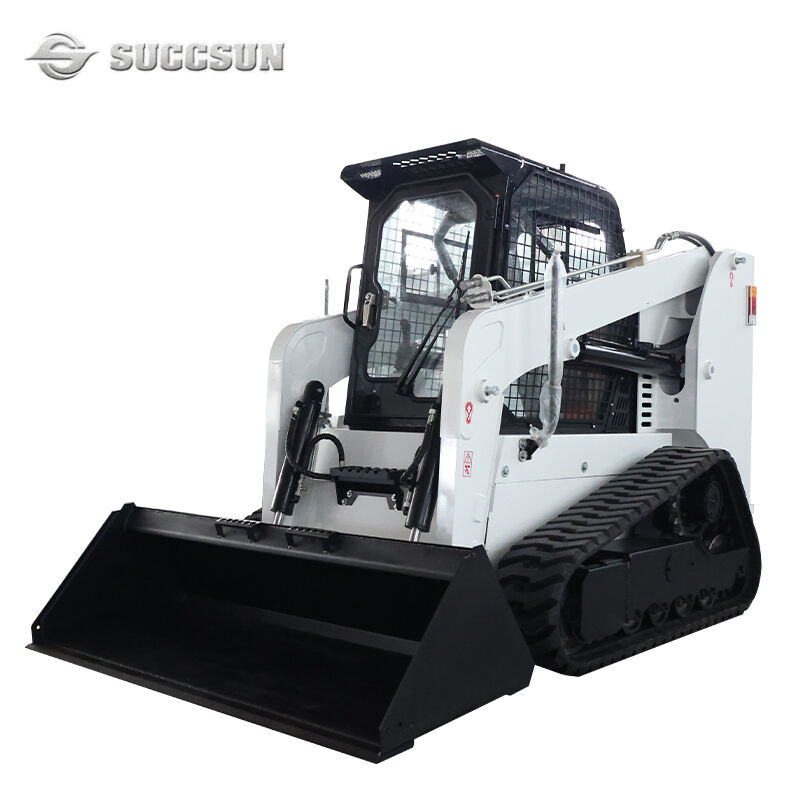
Compact Powerhouse: How Skid Steer Loaders Maximize Efficiency in Tight Spaces
Understanding the versatility of skid steer loaders in construction
The versatility of skid steer loaders comes from their small size and ability to work with all sorts of attachments, which is why they've become so essential at construction sites these days. What really makes them stand out is that zero turn steering system that lets operators work in tight spots where bigger machines just can't fit. Plus, the hydraulic system handles loads of different attachments for various jobs. Some recent studies show that construction projects using these little beasts finish about 25 percent quicker compared to when crews only use big machinery (Construction Efficiency Report 2024). Contractors who deal with cramped job sites know this well because the combination of being small enough to move around but still powerful enough to do multiple tasks makes skid steers absolutely worth having on site.
How maneuverability in tight spaces enhances job site efficiency
Skid steer loaders have amazing agility that actually saves time and money on jobsites because they don't need as much space to turn around. Regular machinery needs big open areas to make those wide turns, but these little workhorses can spin all the way around right where they stand. That means they keep working even when stuck between buildings or navigating tight spots during demolition projects in crowded city neighborhoods. The ability to operate efficiently in limited spaces is especially important for construction crews dealing with tight urban lots where every square foot counts against deadlines. Many contractors say their teams save about half an hour each day just by not having to move machines around so much, which adds up to real money saved on labor costs across the entire length of a project.
Efficiency in reducing labor and time through compact design
Skid steer loaders have this really compact design that saves a ton of time and labor because they cut out so many manual steps and reduce the need to switch between different pieces of equipment. The way these machines are built lets workers swap attachments super fast, sometimes in under two minutes flat. That means one person can handle several different jobs on site without having to wait around for someone else with specialty gear. This kind of flexibility actually allows construction companies to get away with smaller crews while still keeping up their output levels, which is huge when finding good workers has become such a challenge lately. According to some recent industry numbers from the Construction Labor Efficiency Index 2024, sites using skid steers typically need about 40 percent less man hours just for moving materials around and getting the grounds ready compared to older methods.
Industry paradox: Small size, massive impact – redefining equipment ROI
Skid steer loaders are kind of fascinating when you think about them. These little machines pack quite a punch despite their small size, really affecting how projects get funded and what kind of return companies see on their equipment investments. They take up around 60% less room than regular loaders but still manage to do about 85% of what those bigger machines can do thanks to all sorts of attachments. Contractors who have switched over report some pretty impressive numbers too. Some say they're getting their money back 50% faster and using the machines 35% more often than before when they had specialized equipment for each job. Beyond just saving cash upfront, there's another benefit nobody talks about much. Because these compact machines don't need so much space, they cause less mess at construction sites. Workers can actually do multiple tasks at once without waiting for one area to clear out first, which speeds things up across the whole project timeline.
Core Construction Applications: Earthmoving, Excavation, and Demolition
Material handling and earthmoving: Streamlining on-site logistics
Skid steer loaders are really good at moving stuff around and digging into earthwork tasks, which makes them invaluable for keeping things moving smoothly on construction sites. These machines pack quite a punch despite their small footprint, able to squeeze through tight spaces where bigger machinery would get stuck. What's more, they have enough muscle behind them to haul heavy loads like dirt, rocks, and building supplies with relative ease. Contractors who rely on these little workhorses often find themselves needing fewer workers and less back-and-forth between different pieces of equipment. The bottom line? Jobs get done faster and cheaper. Some contractors report cutting down on material transport times by almost half when switching from old school methods to skid steer operations.
Precision excavation and trenching with auger and bucket attachments
What makes a skid steer loader so versatile comes down to those special attachments that turn it into different machines for digging and trenching jobs. With an auger attachment attached, contractors can drill holes right where they need them for fence posts, building foundations, or even setting up utility poles. Different buckets mean operators can handle all sorts of trenching tasks too. This kind of precision matters a lot in cities where there's barely enough room to maneuver without knocking something over nearby. Most modern loaders have these quick connect systems now, letting workers swap from digging mode to grading or loading within just a few minutes. That saves time on site and keeps the machine working hard all day long instead of sitting idle waiting for parts changes.
Case Study: Underground utility installation in urban Denver using only skid steers
Last year's water main replacement project in downtown Denver really highlighted what skid steer loaders can do in tight city spaces. The crew brought in several skid steers fitted with different attachments including trenchers for digging, augers for boring holes, and buckets for moving debris. They managed to install all the underground utilities without needing those big machines that tear up whole blocks. These little workhorses squeezed through alleyways and between parked cars while doing everything from digging trenches to filling them back in. The whole job wrapped up about a month faster than originally planned, and local businesses stayed open most of the time instead of facing weeks of road closures. Seeing these compact machines handle such complicated work makes it clear why more contractors are turning to skid steers for their urban projects.
Demolition applications with hydraulic breakers and grapples
When fitted with hydraulic breakers and grapples, skid steer loaders become serious demolition machines capable of tackling tough jobs. Breakers hit surfaces hard enough to crack through concrete, asphalt, and brickwork, whereas grapples let operators grab, move, and sort through all sorts of rubble with surprising accuracy. Together these attachments make it possible to do careful interior demolition work in tight spaces where big machinery simply won't fit, which is why many contractors turn to skid steers for those tricky spot removals. Plus, most modern models come with sealed cabs that shield drivers from flying bits of broken material and clouds of dust, something that makes a huge difference on actual job sites where safety matters most.
Controversy Analysis: Safety concerns vs. productivity gains in interior demolition
There's quite a debate going on about using skid steer loaders inside buildings during demolition work. On one hand, these machines do knock down walls and tear out structures much faster than crews working by hand, which cuts down on labor costs too. But safety experts keep pointing fingers at several problems they see. Operators often can't see what's happening around them clearly enough, there's always that risk of carbon monoxide building up when working in tight spaces, and those machines tend to wobble around on floors that aren't level. The good news is manufacturers have been adding better visibility screens, making sure exhaust systems vent properly, and improving how stable these machines stay even on rough ground. Contractors who bring in skid steers report finishing interior demolition jobs about 45 percent quicker than traditional methods. Still, nobody argues that strict safety rules need to be followed and operators must get proper training before handling these powerful machines in confined areas where mistakes could be really dangerous.
Grading, Roadwork, and Surface Preparation with Precision
Skid steer loaders bring real precision to grading jobs, roadwork, and getting surfaces ready for whatever comes next. That's why they're pretty much essential if contractors want flat bases and good drainage at construction sites. The small size of these machines combined with their hydraulic systems lets workers get really precise in their grading work. This cuts down on how much hand labor is needed and saves time when mistakes happen. When equipped with different attachments, skid steers can tackle everything from initial rough grading all the way to smoothing out the final surface. Most experienced contractors know that having one of these around makes sure projects actually match those detailed specs engineers draw up.
Roadwork and Grading Capabilities of Skid Steer Loaders
Skid steer loaders are really good at roadwork and grading because they can move so well and have all sorts of attachments. When fitted with those special grading buckets and rakes, these machines do an amazing job spreading out and leveling different materials like dirt, gravel, even asphalt. What makes them stand out is how they can get into tight spots where bigger equipment just cant fit. This means workers can do detailed jobs near things like curbs, trees, or buildings without causing damage. Contractors love this because it cuts down on digging too much and wasting materials. We've seen crews finish projects faster and spend less money overall while still getting great results from their work sites.
Laser-Guided Grading with GPS-Equipped Attachments
Adding laser guides and GPS attachments to skid steer loaders has completely changed how accurate grading work gets done on job sites. Operators can now hit those exact elevation marks and slope angles with very little margin for error, sometimes getting it right the first time through without needing multiple passes. Industry data shows that when using GPS for grading tasks, companies typically see around a 30% drop in overall costs because there's less need to fix mistakes later on. The boost in precision really matters for big construction projects where maintaining consistent grades throughout the site becomes essential for proper water drainage systems and stable building foundations down the road.
Trend: Integration with Smart Construction Tech for Precision Leveling
More and more contractors are starting to pair their skid steer loaders with smart tech for precise leveling work on job sites. The latest models come equipped with instant feedback systems and automatic controls that tweak attachments according to blueprints stored in memory. What makes this so valuable? For starters, it cuts down on mistakes while making life easier for operators who no longer need to constantly adjust settings manually. Training new crew members takes less time too since much of the heavy lifting gets handled by the machine itself. With prices coming down on these intelligent systems, we're likely going to see skid steers become standard equipment at construction sites where getting things right the first time matters most.
Specialized Tasks: Concrete, Dust Control, Hydroseeding, and Multi-Phase Use
Concrete pouring and mixing with skid steer attachments
Skid steer loaders revolutionize concrete work through specialized attachments like augers and mixers, enabling efficient batch mixing and precise placement in hard-to-reach areas. This eliminates manual labor for small to medium pours, reducing project timelines by up to 40% compared to traditional methods.
Dust control and water transportation on job sites
With integrated tank systems and spray attachments, skid steers provide dynamic dust suppression by delivering targeted misting across active work zones. This capability is critical for compliance with silica dust regulations (OSHA 2023), while their compact design allows water transportation to areas inaccessible to larger trucks.
Hydroseeding and soil stabilization using skid steer equipment
Hydroseeding attachments transform skid steers into mobile erosion control units, uniformly spraying seed-slurry mixtures over large areas for rapid vegetation establishment. For soil stabilization, these machines distribute binding agents to reinforce unstable subgrades, proving essential for projects requiring immediate ground preparation with minimal equipment footprint.
Strategy: Multi-shift utilization of one skid steer across different construction phases
The ultimate efficiency emerges through strategic multi-shift deployment, where a single skid steer transitions between daylight excavation, evening concrete work, and night-time site cleanup. This approach maximizes equipment ROI by achieving 24-hour utilization rates exceeding 85%, fundamentally changing how contractors approach equipment investment and job sequencing.
The Attachment Ecosystem: Unlocking 40+ Functions from One Skid Steer Loader
Use of attachments to enhance functionality on construction sites
What makes skid steer loaders so versatile? Specialized attachments are the secret weapon here. These attachments turn one basic machine into something capable of doing all sorts of different jobs around construction sites. When workers switch out the tools, they go from digging holes to smoothing surfaces, smashing old concrete to moving heavy materials - all without having to bring in several different machines for each task. The whole system saves money because companies don't need to buy as much equipment. Plus, it helps keep things organized on tight job sites where space is at a premium. Contractors love this flexibility since it means fewer trucks parked around and less clutter getting in the way of actual work.
Common attachments for skid steers: Buckets, brooms, augers, and more
Most operators rely on a basic set of attachments when working with skid steer loaders. Standard buckets get the job done for moving dirt around and leveling ground, whereas pallet forks come in handy for lifting those really heavy items. For fence posts or tree planting jobs, augers create just the right sized hole every time. When it comes to breaking up concrete, nothing beats a good hydraulic breaker attached to the back. Brooms sweep away mess quickly from work sites, and grapples are great for grabbing all sorts of odd stuff like big rocks or construction waste that doesn't fit nicely into other containers. What makes these tools so valuable is how they all fit onto such a small machine without taking up too much space on site.
Innovations in quick-coupler systems
Quick attach systems are probably one of those game changers when it comes to making attachment changes happen fast. The hydraulic couplers let workers swap out tools in just over a minute flat while staying right where they are in the operator's seat. Better models come with auto lock features plus some smart hydraulic tweaks that keep everything connected securely and running smoothly. Getting these systems right makes a big difference in how much time machines actually spend working versus sitting idle during tool swaps. Some studies show that good quality quick couplers can boost equipment usage rates somewhere around 40 percent according to Equipment World from last year.
Phenomenon: One machine, 40+ functions – the modular revolution in construction
Skid steer loaders that can handle more than 40 different jobs are changing how construction sites operate. Instead of needing separate machines for each task, contractors now get all this functionality packed into one unit. The financial benefits are pretty impressive too – most companies report cutting their equipment expenses somewhere around half when they switch to this system, plus there's less clutter on the job site. What really matters though is what happens after the initial savings. Contractors find themselves able to take on all sorts of projects without having to stockpile specialized machinery. A landscaping crew might suddenly handle foundation work, or a road crew could do some warehouse remodeling. This kind of versatility means better scheduling and faster response times without breaking the bank on new equipment purchases.
FAQ Section
Q: What are skid steer loaders commonly used for in construction?
A: Skid steer loaders are used for a variety of tasks, including earthmoving, demolition, excavation, grading, material handling, and more. Their versatility is enhanced by various attachments, allowing them to perform multiple functions efficiently.
Q: How do skid steer loaders improve efficiency in tight spaces?
A: Skid steer loaders have zero turn steering, allowing them to maneuver easily in tight spaces, which saves time and increases productivity. They are particularly useful in urban construction settings where space is limited.
Q: Why are skid steer loaders considered a cost-effective investment?
A: Skid steer loaders provide a high return on investment due to their ability to perform multiple tasks with different attachments, reducing the need for additional equipment. Their compact design leads to less site disruption, saving both time and labor costs.
Q: Can skid steer loaders be used for demolition work?
A: Yes, skid steer loaders can be equipped with hydraulic breakers and grapples to perform demolition tasks, including concrete and building material removal in confined spaces.
Table of Contents
- Compact Powerhouse: How Skid Steer Loaders Maximize Efficiency in Tight Spaces
-
Core Construction Applications: Earthmoving, Excavation, and Demolition
- Material handling and earthmoving: Streamlining on-site logistics
- Precision excavation and trenching with auger and bucket attachments
- Case Study: Underground utility installation in urban Denver using only skid steers
- Demolition applications with hydraulic breakers and grapples
- Controversy Analysis: Safety concerns vs. productivity gains in interior demolition
- Grading, Roadwork, and Surface Preparation with Precision
- Specialized Tasks: Concrete, Dust Control, Hydroseeding, and Multi-Phase Use
- The Attachment Ecosystem: Unlocking 40+ Functions from One Skid Steer Loader
- FAQ Section